When the Canopy Goes Quiet: Insectivorous Bird Decline and the Hidden Consequences for Forest Carbon and Soil Health
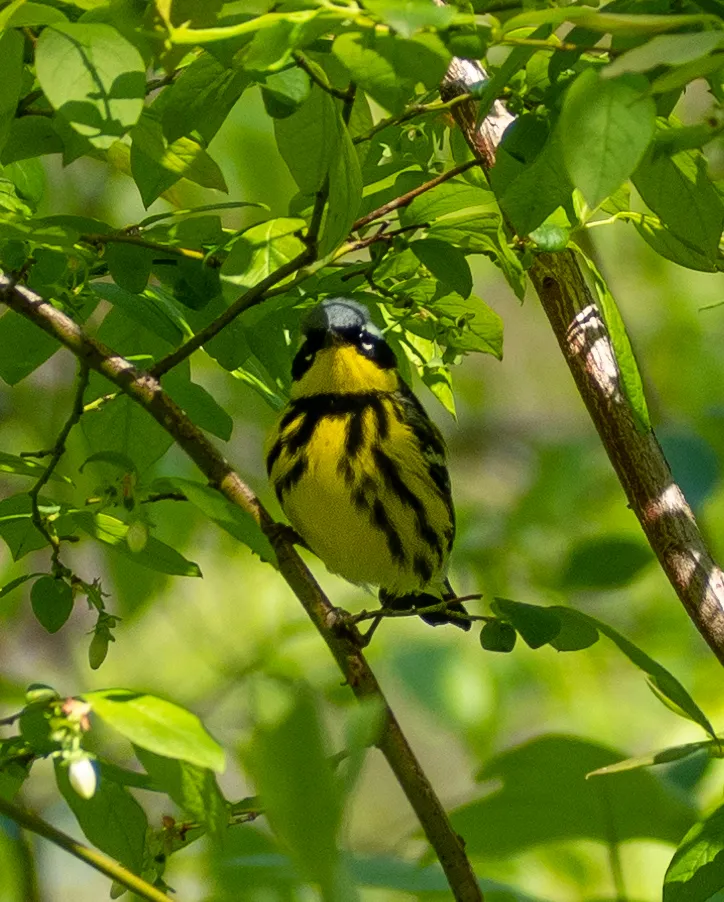
Photo: Rhododendrites, CC BY-SA 4.0, via Wikimedia Commons
Listen carefully in an eastern hardwood forest during a May morning twenty years ago, and the sound was almost overwhelming—warblers, vireos, flycatchers, and thrushes layering song upon song in a dense acoustic tapestry. Listen today in the same forest, and the difference is measurable. Not just subjectively quieter, but documentably, statistically quieter. The North American Breeding Bird Survey, maintained by the U.S. Geological Survey and the Canadian Wildlife Service, has tracked the decline of aerial insectivores and foliage-gleaning species across the continent for decades. The numbers are stark: many of North America's most abundant insectivorous forest birds have declined by 25 to 50 percent over the past half-century, with some migratory warblers showing losses exceeding 70 percent in core breeding areas.
The standard response to these figures, both in media coverage and in conservation funding priorities, has been to frame the issue as one of biodiversity loss—a diminishment of natural heritage, a silencing of a beloved seasonal experience. These framings are not wrong, but they are incomplete in a way that has meaningful consequences for how we prioritize conservation investment and forest management. The more urgent story is not about what we are losing aesthetically. It is about what we are losing functionally.
Insectivores as Trophic Regulators
Insectivorous birds occupy a pivotal position in forest food webs. They are, in the most direct sense, the primary biological check on phytophagous—plant-eating—insect populations in temperate forests. A single pair of black-throated green warblers (Setophaga virens) nesting in a northeastern forest will consume tens of thousands of caterpillars, aphids, and other soft-bodied insects over the course of a breeding season. Multiply that predation pressure across the dozens of insectivorous species that historically co-occurred in any given forest stand, and the aggregate suppression of herbivore populations becomes ecologically decisive.
When that predation pressure diminishes, the consequences move through the system in predictable but underappreciated ways. Herbivorous insect populations—particularly lepidopteran larvae—increase in density. Foliage consumption rises. Trees allocate more metabolic resources to chemical defenses and leaf replacement, reducing the carbon available for structural growth and root investment. Over time, reduced tree growth translates directly into reduced carbon sequestration—a connection that ecosystem modelers have been quantifying with increasing precision.
A 2019 study published in Science Advances used exclosure experiments in forest plots across the eastern United States to directly measure the effect of bird predation on caterpillar densities and subsequent tree growth. Plots from which birds were excluded showed significantly elevated herbivore loads and measurably reduced leaf area index by the end of the growing season. The authors estimated that bird predation services in eastern temperate forests may contribute to carbon retention equivalent to hundreds of kilograms per hectare annually—a figure that, scaled across the forested eastern United States, represents a carbon subsidy of considerable magnitude.
Nutrient Redistribution and the Guano Effect
The trophic regulation story is compelling on its own, but it is only part of the functional picture. Insectivorous birds also serve as nutrient vectors—mobile links that move nitrogen, phosphorus, and other elements across spatial scales that passive decomposition cannot match.
Avian guano is, in biogeochemical terms, a highly concentrated nutrient package. Birds that forage on insects in the forest midstory and canopy deposit their waste on the forest floor, in bark crevices, and on leaf litter, introducing nitrogen and phosphorus at microsite scales that measurably elevate soil fertility. Research conducted in Appalachian hardwood forests has found elevated nitrogen mineralization rates in areas with high songbird densities, a pattern attributable in part to this direct deposition pathway. In high-elevation spruce-fir forests of the southern Appalachians—ecosystems already stressed by acid deposition and climate warming—the nutrient redistribution performed by resident and migratory insectivores may represent a non-trivial component of total nitrogen inputs.
The loss of migratory insectivores is particularly consequential in this context. Species that winter in the Neotropics and breed in North American forests function as nutrient conduits between biomes, carrying phosphorus and other elements northward that would otherwise remain locked in tropical soils. The progressive collapse of these migration pathways severs a biogeochemical connection that has shaped temperate forest nutrient dynamics since the Pleistocene.
Cascading Effects on Soil Microbiology
The most indirect—but potentially most consequential—pathway through which insectivorous bird declines affect forest health operates through the soil microbial community. The connection is not immediately obvious, but the logic is tractable: elevated herbivory alters litter quality and quantity; altered litter inputs change the substrate available to decomposer communities; and shifts in decomposer community composition affect the rates of carbon stabilization, nitrogen cycling, and organic matter transformation that determine long-term soil fertility.
Several research groups working in deciduous forests of the Upper Midwest and the mid-Atlantic have begun examining these indirect pathways explicitly. Preliminary findings suggest that forests experiencing elevated caterpillar pressure—a condition increasingly common in areas where insectivorous bird populations have declined—show measurable shifts in soil fungal community composition, with reduced abundance of ectomycorrhizal species and increased dominance of saprotrophic decomposers. The implications for forest carbon storage are not yet fully characterized, but the directional signal is concerning.
The Policy Gap
Despite the accumulating evidence that insectivorous birds perform ecologically essential functions in forest systems, U.S. forest policy has been slow to incorporate avian community health as a management metric. The Forest Service's National Forest Management Act planning regulations reference wildlife habitat broadly, but operational prescriptions rarely specify insectivore guild abundance as a target condition or monitoring indicator. Timber harvest planning, prescribed fire scheduling, and invasive species management are not routinely evaluated for their effects on insectivorous bird communities, even in cases where the relevant science is well-developed.
This gap is not merely an oversight of omission. It reflects a structural tendency in natural resource policy to treat ecological functions as separable—to manage forests for timber, carbon, or biodiversity in relative isolation rather than recognizing that these outcomes are produced by integrated ecological processes in which birds, insects, soils, and trees are functionally inseparable.
The Migratory Bird Treaty Act provides foundational legal protection for most insectivorous species, but protection from direct take does not address the habitat fragmentation, pesticide exposure, and climate-driven phenological disruption that are driving population declines. A more adequate policy response would integrate insectivore guild monitoring into forest management planning, establish measurable recovery targets for declining species, and treat the restoration of insectivorous bird communities as a forest carbon strategy—not merely a biodiversity amenity.
Listening Differently
The silence spreading through America's forest canopies is not a peripheral concern. It is a leading indicator of functional deterioration in ecosystems that the nation depends upon for carbon storage, water regulation, and the ecological services that no infrastructure budget can replicate. The science connecting insectivorous bird declines to soil health, nutrient cycling, and forest carbon is no longer speculative. It is detailed, mechanistically grounded, and increasingly hard to set aside.
What remains is the policy will to act on it.