From Bare Ground to Prairie: Seven American Grassland Recoveries That Are Redefining What Restoration Can Achieve
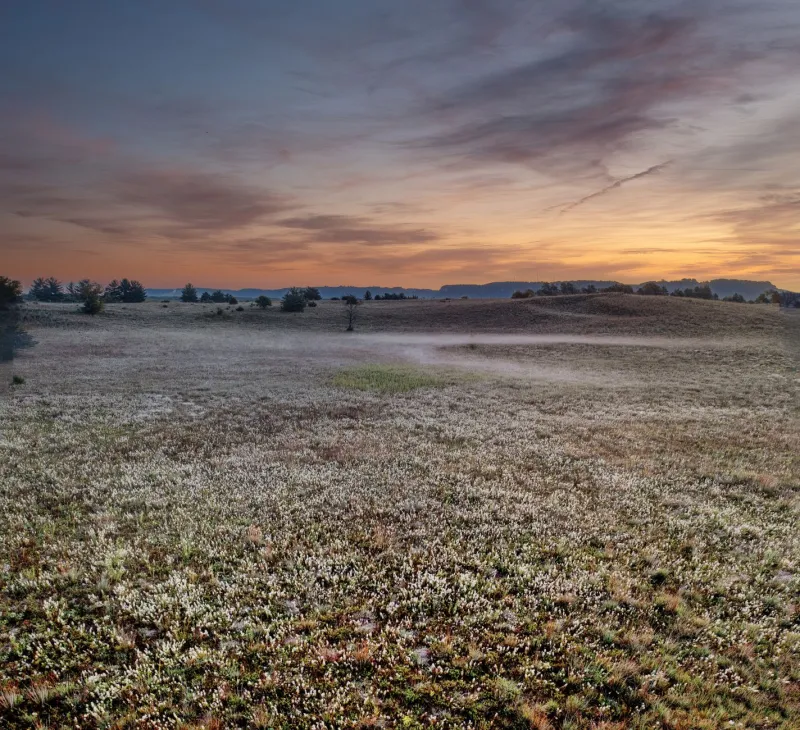
North American grasslands once stretched across more than a billion acres, from the tallgrass prairies of Illinois and Iowa to the mixed-grass plains of Kansas and Nebraska, the shortgrass steppes of eastern Colorado, and the Palouse prairies of the Pacific Northwest. Today, less than four percent of the original tallgrass prairie ecosystem remains intact, and most other grassland types have been reduced to similarly diminished fragments. The ecological consequences have been severe: grassland-dependent bird populations have declined more steeply than those of any other North American habitat guild since 1970, according to data from the North American Breeding Bird Survey.
Yet even as the losses continue, a growing body of restoration science is demonstrating that grassland recovery—genuine, measurable, ecologically meaningful recovery—is achievable when the right combination of methods, resources, and institutional commitment is applied. The following seven projects represent some of the most instructive examples of what that recovery can look like in practice.
1. The Nachusa Grasslands Restoration (Illinois)
Location: Franklin Grove, Illinois | Scale: 4,000+ acres | Lead Organization: The Nature Conservancy
The Nachusa Grasslands project in northern Illinois began in the 1980s as a modest effort to restore remnant prairie fragments on land acquired from retiring farmers. What has since emerged is one of the most scientifically sophisticated grassland restoration programs in the eastern United States.
Restoration ecologists at Nachusa have pioneered a seed-source matching protocol that prioritizes locally collected native seed over commercial cultivars, working from the premise that genetic diversity adapted to local conditions produces more resilient plant communities. Over three decades of monitoring, restored plots at Nachusa now support more than 700 plant species, and the reintroduction of a bison herd in 2015 has accelerated the development of structural heterogeneity—the varied patch mosaic of grazed, ungrazed, burned, and unburned areas—that grassland specialists require.
Key lesson: Long-term commitment and locally sourced seed are non-negotiable for high-quality grassland restoration outcomes.
2. The American Prairie Reserve (Montana)
Location: North-central Montana | Scale: 450,000+ acres (target: 3.2 million) | Lead Organization: American Prairie
The American Prairie Reserve represents perhaps the most ambitious private land conservation initiative in American history—an effort to assemble, through willing-seller land purchases and grazing lease agreements on adjacent federal land, a contiguous grassland reserve spanning millions of acres across the northern Great Plains.
The ecological rationale is grounded in landscape ecology's well-established relationship between reserve size and biodiversity outcomes. Small, isolated grassland patches cannot sustain viable populations of wide-ranging species such as pronghorn, black-footed ferrets, swift foxes, or the bison herds that historically shaped Great Plains ecology. The reserve's bison herd, currently numbering in the hundreds, is central to the restoration strategy—research conducted on the reserve and at comparable sites consistently demonstrates that bison grazing creates the spatial heterogeneity that drives grassland plant diversity.
The project has not been without controversy; some ranching communities have expressed concerns about land consolidation and changes to local economies. American Prairie has responded by developing collaborative grazing arrangements and hunting access programs designed to demonstrate that conservation and rural economic interests can coexist.
Key lesson: Scale matters. Meaningful grassland restoration for wide-ranging species requires landscape-level thinking that transcends individual property boundaries.
3. Tallgrass Prairie National Preserve Expansion (Kansas)
Location: Chase County, Kansas | Scale: 10,894 acres | Partners: National Park Service, The Nature Conservancy
The Tallgrass Prairie National Preserve, established in 1996, protects one of the largest remaining tracts of tallgrass prairie in the United States—a landscape that once covered 170 million acres from Canada to Texas. The preserve's restoration program has focused on reestablishing fire as a primary ecological driver through systematic prescribed burning, with burn units rotated on a multi-year cycle to create the spatial mosaic that maximizes biodiversity.
Long-term vegetation monitoring data from the preserve document a consistent increase in native forb diversity on burned units relative to unburned areas, and the reintroduction of bison in 2009 has further accelerated this trajectory. Breeding bird surveys conducted annually since the preserve's establishment show positive population trends for several grassland obligate species, including greater prairie-chicken and dickcissels, that are declining across the broader landscape.
Key lesson: Fire is not merely a management tool at tallgrass prairie sites—it is an ecological necessity without which restoration outcomes plateau.
4. The Platte River Prairies (Nebraska)
Location: Central Nebraska | Scale: 12,000+ acres | Lead Organization: The Nature Conservancy
The Platte River Prairies project has developed a restoration methodology that has since been adapted by practitioners across the Great Plains. Central to the approach is "diversity harvesting"—the collection of seed from high-quality remnant prairie sites and its direct broadcast onto restoration plots, rather than relying on commercial seed mixes. This technique, developed through decades of experimental work by TNC ecologist Chris Helzer and colleagues, produces plant communities with substantially higher species richness than conventionally seeded restorations.
The Platte River sites also serve as critical habitat for migratory sandhill cranes and whooping cranes, which stage along the river corridor in enormous numbers each spring. The restoration of wet meadow and upland prairie habitats adjacent to the river has measurably improved the quality and extent of available foraging habitat for these species.
Key lesson: Seed sourcing methodology has a disproportionate influence on the long-term ecological quality of restored grasslands.
5. Walnut Creek National Wildlife Refuge (Iowa)
Location: Prairie City, Iowa | Scale: 8,654 acres | Lead Organization: U.S. Fish & Wildlife Service
Now officially designated Neal Smith National Wildlife Refuge, the Walnut Creek project represents one of the federal government's most sustained commitments to tallgrass prairie restoration. Established in 1990 on former cropland in the heart of Iowa's heavily agricultural landscape, the refuge has restored thousands of acres of native prairie and savanna habitat through a combination of native seeding, prescribed fire, and targeted invasive species management.
Research conducted in collaboration with Iowa State University has tracked the recovery of invertebrate communities on restored units over time, finding that pollinator diversity—including native bee species of conservation concern—increases substantially with restoration age and management intensity. The refuge's educational programming reaches tens of thousands of visitors annually, serving as a living demonstration of prairie ecology in a state where less than 0.1 percent of native prairie survives.
Key lesson: Federal refuges embedded in agricultural landscapes can serve simultaneously as biodiversity reservoirs and public education platforms.
6. The Sonoran Desert Grassland Restoration Initiative (Arizona)
Location: Southern Arizona | Partners: Bureau of Land Management, Arizona Game and Fish Department, multiple NGOs
Not all American grassland restoration occurs in the Midwest. Southern Arizona's desert grasslands—a distinct ecosystem characterized by native bunchgrasses, scattered shrubs, and remarkable wildlife diversity—have been severely degraded by a century of overgrazing, invasive grass encroachment (particularly buffelgrass, Pennisetum ciliare), and altered fire regimes.
A multi-agency collaborative has spent the past fifteen years developing and refining methods for buffelgrass control at landscape scales, combining mechanical removal, targeted herbicide application, and carefully managed fire to restore native grass dominance. Monitoring data indicate that sites receiving sustained treatment show significant increases in native grass cover and associated wildlife use, including by the endangered Chiricahua leopard frog and several declining grassland bird species.
Key lesson: Invasive grass management requires sustained, multi-year commitment and cross-jurisdictional coordination to achieve landscape-scale outcomes.
7. The Northern Great Plains Grassland Bird Initiative (Multiple States)
Location: Montana, Wyoming, North Dakota, South Dakota | Partners: U.S. Fish & Wildlife Service, state agencies, private landowners
This initiative takes a different approach from land-acquisition-based restoration, working instead through voluntary incentive programs—primarily USDA's Conservation Reserve Program and Grassland Reserve Program—to maintain and enhance native grassland condition on private ranch lands. The ecological premise is that the most cost-effective grassland conservation often involves preventing further degradation of existing native grassland rather than restoring previously converted land.
Participating ranchers receive technical assistance and financial support for grazing management practices that benefit grassland birds, including deferred grazing during nesting season, maintenance of adequate residual cover, and avoidance of unnecessary tillage or herbicide application. Breeding bird monitoring on enrolled properties consistently shows higher densities of target species—including Sprague's pipit, Baird's sparrow, and chestnut-collared longspur—than on comparable unenrolled sites.
Key lesson: Working-lands conservation programs that align economic incentives with ecological outcomes can achieve biodiversity benefits at scales that land acquisition alone cannot.
What These Projects Tell Us
Taken together, these seven initiatives reveal several consistent themes that should inform grassland restoration policy and practice across the United States. Ecological outcomes are strongly correlated with the fidelity of restoration methods to the processes—fire, grazing, hydrological function—that historically shaped these systems. Scale matters in ways that individual site-level projects cannot address. And the most durable successes tend to involve sustained institutional commitment measured in decades, not grant cycles.
America's grasslands are not beyond recovery. But recovery requires treating them as what they are: among the most ecologically complex and functionally important ecosystems on the continent, worthy of the scientific rigor and policy commitment that their condition demands.