Oaks on the Brink: The Science Behind a Forest Crisis and the Policies That Could Turn the Tide
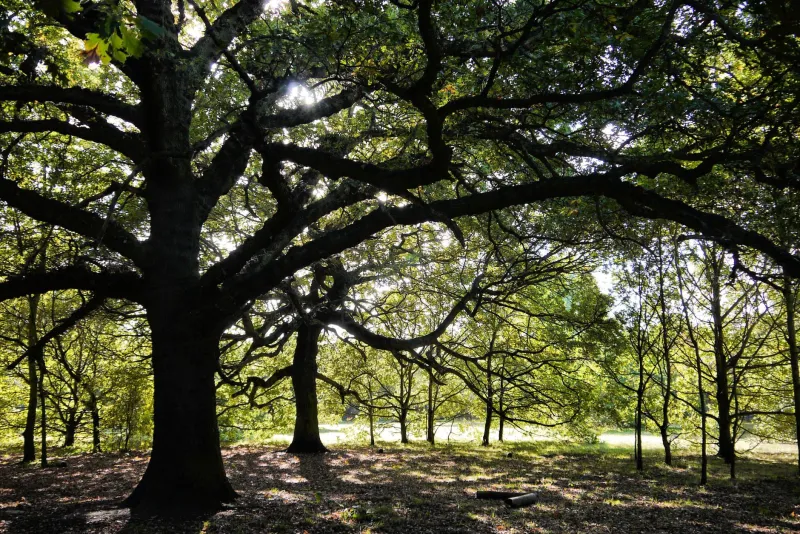
For generations, the oak has stood as an unofficial emblem of American ecological identity. From the sprawling white oak savannas of the Midwest to the mixed hardwood ridges of Appalachia and the blue oak woodlands of California's foothills, oaks (Quercus spp.) anchor some of the continent's most biologically diverse and economically productive ecosystems. Yet a growing body of scientific evidence suggests that these forests are in serious and accelerating decline—and that without decisive policy intervention grounded in ecological research, the losses could prove irreversible within this century.
The Scope of the Problem
The decline of oak-dominated systems is not a new discovery, but its urgency has sharpened considerably over the past two decades. Long-term forest inventory data compiled by the USDA Forest Service reveal a consistent pattern: oak regeneration is failing across much of the species' native range. Mature oaks continue to die from age, drought stress, and pest damage, but their seedlings are not replacing them at ecologically meaningful rates. In their place, shade-tolerant competitors—red maple (Acer rubrum) in the East, and various mesophytic species in transitional zones—are filling the canopy.
Dr. Cathryn Greenberg, a research ecologist with the USDA Forest Service's Southern Research Station, has spent decades studying this transition. "What we're witnessing is a fundamental shift in forest composition," she explained in a recent interview. "The conditions that allowed oaks to dominate these landscapes for thousands of years—periodic fire, open canopy structure, disturbance regimes—have been systematically removed over the past century. The forest is responding accordingly."
The numbers are stark. The Midwest's oak savanna ecosystem, once covering an estimated 30 million acres, has been reduced to less than one percent of its original extent. In the central Appalachians, survey data indicate that oaks now account for a shrinking proportion of basal area in forests where they were historically dominant, with the trend line pointing consistently downward.
Three Converging Threats
Scientists identify three primary drivers of oak forest decline, each significant in isolation but collectively devastating in combination.
Fire suppression is perhaps the most consequential. Oaks are fire-adapted species; their thick bark, deep root systems, and ability to resprout after top-kill give them a competitive advantage in ecosystems shaped by periodic low-intensity fire. For centuries, indigenous burning practices maintained open, parklike conditions that favored oak establishment. European settlement disrupted those practices, and twentieth-century fire suppression policies effectively removed fire from the landscape entirely. The result is a dense, closed-canopy forest environment where oak seedlings—which require abundant light—cannot compete.
Invasive pests and pathogens represent the second major threat vector. The emerald ash borer (Agrilus planipennis) has already transformed eastern forests by eliminating ash trees, and oak species now face their own suite of biological threats. Sudden Oak Death, caused by the water mold Phytophthora ramorum, has killed millions of oaks and tanoaks across coastal California and Oregon. The spongy moth (Lymantria dispar dispar), which underwent a taxonomic renaming in 2022, continues to cause episodic defoliation events across the Northeast and Mid-Atlantic. Oak wilt (Bretziella fagacearum) is spreading through the upper Midwest at an accelerating pace, killing red oaks within weeks of infection.
Climate change amplifies both of these stressors while introducing new ones. Shifting precipitation patterns are intensifying drought stress in oak populations across the southern and western portions of the species' range. Warmer winters are expanding the geographic reach of pests that were previously limited by cold temperatures. And altered fire weather conditions are making the kind of carefully managed prescribed burns that ecologists advocate increasingly difficult to implement safely.
What the Research Prescribes
Despite the severity of the situation, forest ecologists are not without tools or strategies. The scientific literature points toward a coherent, if ambitious, suite of interventions.
Prescribed fire is consistently identified as the single most important management tool for oak regeneration. A 2021 study published in Forest Ecology and Management found that sites receiving multiple prescribed burns over a ten-year period showed oak seedling densities three to five times higher than unburned control sites. Land managers at the Mark Twain National Forest in Missouri have been implementing systematic prescribed burn programs for over two decades, and their results largely corroborate these findings.
"The science on fire is unambiguous," said Dr. Patrick Brose, a retired Forest Service researcher who spent his career studying oak regeneration in the central Appalachians. "The challenge is institutional and political, not ecological. We know what oaks need. The question is whether we have the will to provide it."
Beyond fire, researchers advocate for targeted canopy thinning to reduce competition and increase light availability for oak seedlings, active removal of invasive shrub species that suppress regeneration, and assisted migration programs that move oak seed sources to sites where future climate conditions are projected to be more suitable.
The Policy Gap
Perhaps the most significant obstacle to oak forest recovery is not scientific uncertainty but policy inertia. Federal land management agencies operate under a complex web of regulations, liability concerns, and resource constraints that make large-scale prescribed burning programs difficult to scale. State-level programs vary enormously in ambition and funding. Private landowners, who control the majority of eastern hardwood forestland, often lack access to the technical assistance or financial incentives needed to undertake restoration work.
The Forest & Natural Ecosystems Network has joined a growing coalition of scientific organizations calling on Congress to substantially increase funding for the USDA Forest Service's prescribed fire programs, streamline the regulatory processes that delay burn implementation, and create robust incentive structures for private landowners who undertake oak restoration. The recently reauthorized Farm Bill offers some relevant mechanisms, but conservation advocates argue that current funding levels are inadequate given the scale of the challenge.
A Window That Is Closing
Ecologists frequently emphasize that oak restoration is a multigenerational endeavor. Trees planted or regenerated today will not reach ecological maturity for decades. This long time horizon makes the urgency of immediate action all the more acute—delays today translate directly into lost options tomorrow.
The oak forests of the United States represent far more than scenic landscapes. They provide critical habitat for hundreds of wildlife species, including numerous birds and mammals that depend on acorn mast crops. They anchor watersheds, sequester carbon, and support rural economies through timber, hunting, and recreation. Their loss would represent an ecological and economic impoverishment that no future generation would be positioned to easily remedy.
The science is clear. The strategies are available. What remains is the political and institutional commitment to act on the evidence before the opportunity narrows further.