Beneath the Forest Floor: How Fungal Networks Are Rewriting the Rules of Ecosystem Restoration
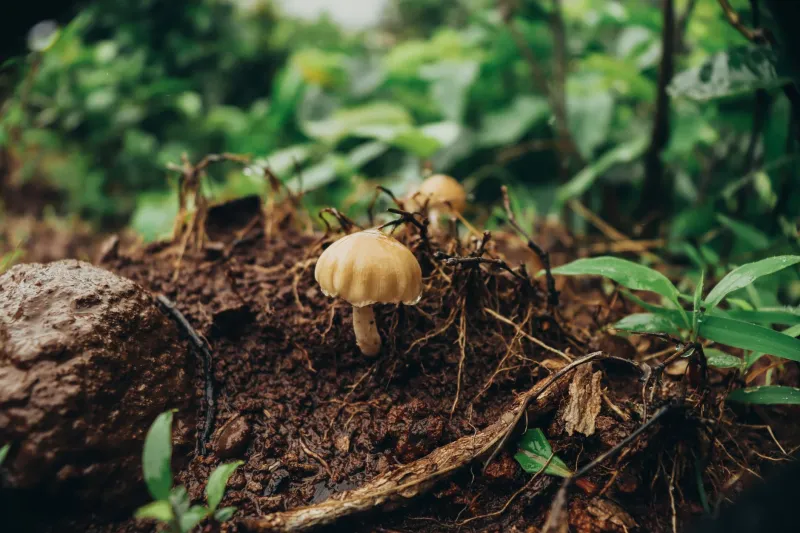
The soil beneath a mature North American forest is, by almost any measure, more complex than the canopy above it. Within a single teaspoon of healthy forest soil, researchers have documented thousands of fungal species, billions of bacterial cells, and a density of biological activity that rivals the most celebrated above-ground ecosystems on the planet. At the center of this subterranean complexity sits one of ecology's most consequential relationships: the mycorrhizal association between fungi and tree roots.
For decades, this relationship was understood primarily in textbook terms—fungi extend a tree's effective root surface area in exchange for photosynthetically derived carbon sugars. Useful, certainly, but not exactly headline-generating science. What researchers have discovered over the past twenty years, however, has fundamentally revised that understanding and, in doing so, is reshaping conservation practice from reforestation nurseries in the Pacific Northwest to ecosystem restoration projects in the Appalachian highlands.
The Network Beneath Our Feet
Mycorrhizal fungi do not merely connect individual trees to soil resources. They form vast, interconnected networks—sometimes called the "wood wide web" in popular science writing, though ecologists prefer more precise terminology—through which carbon, nitrogen, phosphorus, water, and even chemical signaling compounds can move between trees across considerable distances.
Dr. Suzanne Simard of the University of British Columbia, whose decades of research in Pacific Northwest forests helped establish the foundational science of these networks, demonstrated that mature "hub" trees—often referred to as mother trees—transfer disproportionate quantities of carbon to neighboring seedlings through mycorrhizal connections. Her work, subsequently replicated and extended by research teams across North America and Europe, showed that seedling survival rates in experimental plots with intact mycorrhizal networks were significantly higher than in plots where fungal communities had been disrupted.
"We've been managing forests as collections of individual trees when we should have been managing them as integrated biological communities," Simard has noted in her public lectures and published work. "The fungi are not peripheral to forest function. They are central to it."
This insight has immediate and practical implications. Conventional reforestation practices—clear-cutting followed by site preparation that often includes herbicide application and mechanical soil disturbance—are now understood to cause substantial disruption to existing mycorrhizal networks. Seedlings planted into these disturbed soils must establish fungal associations from scratch, a process that is energetically costly and frequently unsuccessful, particularly under drought or nutrient-stressed conditions.
Two Kingdoms, Diverging Consequences
Not all mycorrhizal relationships are ecologically equivalent, and the distinction matters enormously for restoration science. The two dominant mycorrhizal types—arbuscular mycorrhizal (AM) fungi and ectomycorrhizal (ECM) fungi—differ fundamentally in their ecology, their host tree associations, and their implications for ecosystem function.
Ectomycorrhizal fungi, which associate primarily with conifers and many temperate hardwoods including oaks and beeches, are particularly effective at mobilizing nitrogen from organic matter and are closely tied to carbon sequestration dynamics in boreal and temperate forests. Arbuscular mycorrhizal fungi, which associate with a broader range of plant species including most tropical trees and many grassland plants, tend to dominate in warmer, more phosphorus-limited systems.
A landmark 2019 study published in Nature by researchers including Dr. Thomas Crowther of ETH Zurich demonstrated that the global distribution of these two mycorrhizal types has significant implications for forest carbon storage. ECM-dominated forests were found to store substantially more carbon in soil organic matter than AM-dominated forests, largely because ECM fungi produce enzymes that slow organic matter decomposition. As climate change shifts the competitive balance between tree species and alters the geographic distribution of mycorrhizal types, these findings suggest that forest carbon models that ignore fungal communities may be substantially miscalibrated.
Practical Applications in Reforestation
The translation of mycorrhizal science into operational reforestation practice is already underway, though unevenly distributed across institutions and geographies.
Several state forestry agencies and private reforestation contractors have begun incorporating mycorrhizal inoculants—concentrated preparations of beneficial fungal spores—into seedling production protocols. The USDA Forest Service's nursery system has piloted inoculation programs at multiple facilities, with early results suggesting improved seedling establishment rates in challenging sites. Research conducted at Oregon State University found that Douglas-fir seedlings inoculated with native ECM fungi showed significantly better survival and growth in post-fire restoration plantings compared to non-inoculated controls.
Perhaps more significantly, some forest managers are beginning to modify harvest and site preparation practices to preserve residual mycorrhizal networks. Retention forestry approaches—which leave living trees, snags, and intact soil patches distributed across harvest units—have been shown to accelerate mycorrhizal recolonization of disturbed areas by providing source populations of fungal propagules. The Pacific Northwest's variable retention harvest systems, developed partly in response to research on old-growth forest ecology, represent one of the most advanced operational implementations of this thinking.
Dr. Randy Molina, a mycorrhizal ecologist whose career with the USDA Forest Service spanned four decades, emphasizes that the application of this science requires significant institutional adaptation. "The challenge is that fungal ecology operates on spatial and temporal scales that don't map neatly onto standard forest management planning cycles," he observed. "We're asking managers to think about invisible organisms across landscapes over decades. That requires both scientific literacy and institutional commitment."
Carbon Sequestration and the Fungal Frontier
As carbon markets and natural climate solutions attract increasing policy attention, mycorrhizal science is entering the realm of climate finance with significant implications. Current carbon accounting methodologies for forests focus overwhelmingly on above-ground biomass and, to a lesser extent, soil organic carbon. Fungal biomass—which can constitute a substantial fraction of total forest biomass in ECM-dominated systems—is largely absent from these calculations.
Researchers at Stockholm University published findings in 2022 estimating that ectomycorrhizal fungi in northern hemisphere forests may store the equivalent of several years of global carbon emissions in their mycelial networks alone. While these estimates carry significant uncertainty and have generated productive scientific debate, they underscore the degree to which current carbon accounting frameworks may be undervaluing intact forest ecosystems.
For conservation policy, this matters. If carbon markets are to function as effective incentives for forest protection and restoration, they must eventually incorporate the full biological complexity of the systems they are valuing—and that complexity is, in no small part, fungal.
An Emerging Research Agenda
Despite rapid advances, mycorrhizal science retains vast areas of genuine uncertainty. The functional significance of network-mediated resource transfer under field conditions—as opposed to controlled experimental settings—remains contested among researchers. The degree to which mycorrhizal inoculation translates to durable establishment benefits across diverse site conditions requires further investigation. And the interaction between mycorrhizal communities and the increasingly complex disturbance regimes associated with climate change is only beginning to be characterized.
What is not uncertain is the direction of the field. Mycorrhizal ecology has moved from a specialized subdiscipline to a central concern of applied forest science in a remarkably short period. The networks beneath America's forests are not background infrastructure. They are, in a very real sense, the forests themselves—and understanding them is becoming inseparable from the project of conserving them.