More Than a Fish Passage Problem: Why America's Culvert Crisis Is Rewriting Watershed Science
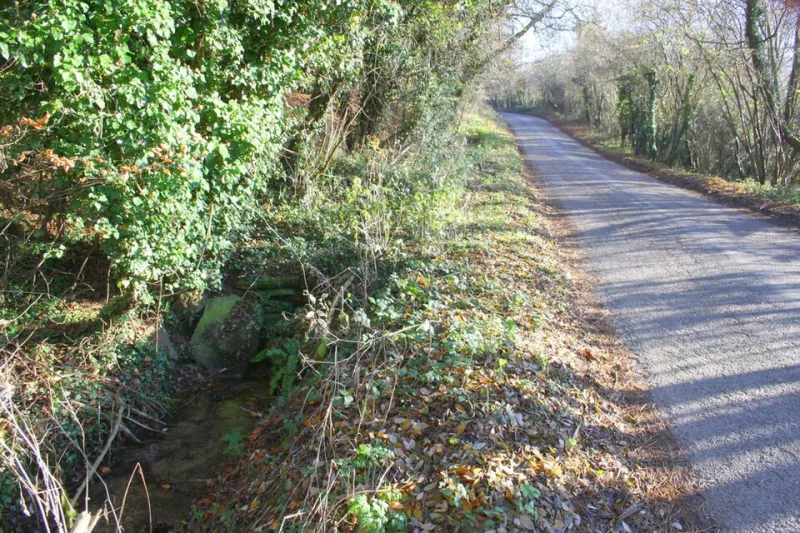
Photo: Roger Templeman , CC BY-SA 2.0, via Wikimedia Commons
There are an estimated 900,000 road-stream crossings in the contiguous United States. The majority are culverts—corrugated metal pipes, concrete boxes, and perforated tubes inserted beneath roads to move water from one side to the other. They are so ubiquitous that they have become effectively invisible, not just to the public but to the policy frameworks that govern watershed management. When they appear in environmental discourse at all, it is almost invariably through the lens of fish passage: culverts block salmon. Culverts strand brook trout. Install better culverts—or remove them entirely—and the fish will return.
This framing is not wrong. It is, however, dangerously incomplete. And that incompleteness has allowed a genuine infrastructure crisis to persist beneath the surface of American environmental policy, accumulating ecological debt that fish-passage metrics alone are wholly inadequate to capture.
What a Culvert Actually Does to a Stream
To understand why the fish-passage framing is insufficient, it helps to think carefully about what a functioning stream crossing actually represents in hydrological terms—and what a culvert substitutes for it.
A natural stream channel at a road crossing point is not simply a conveyance for water and fish. It is a site of active hydraulic work: the movement of sediment, the exchange of surface and groundwater, the modulation of flow velocity, and the maintenance of channel geometry. The stream and its floodplain interact continuously at these points, with water moving laterally and vertically as well as downstream. This connectivity—longitudinal, lateral, and vertical—is what freshwater ecologists mean when they describe a stream as functionally intact.
A culvert severs all three dimensions of that connectivity simultaneously. Longitudinally, it compresses a reach of natural channel into a confined pipe, accelerating flow velocity and eliminating the hydraulic complexity that supports aquatic invertebrates and provides fish rearing habitat. Laterally, it cuts the stream off from its floodplain, preventing the overbank flows that recharge riparian groundwater and sustain the vegetation communities that shade, cool, and feed the channel. Vertically, it interrupts the hyporheic exchange—the movement of water between the surface channel and subsurface alluvial sediments—that regulates stream temperature, filters nutrients, and provides refugia for invertebrates during thermal stress events.
None of these disruptions are captured by fish passage assessments.
The Sediment Transport Problem
Of the non-biological consequences of culvert installation, the disruption of sediment transport may be the most consequential and the least discussed in restoration planning contexts.
Streams in natural condition maintain a dynamic equilibrium between sediment supply and transport capacity. This equilibrium shapes channel morphology, sustains gravel beds essential for salmonid spawning, and determines the geomorphic character of the entire downstream watershed. Culverts disrupt this equilibrium in two distinct ways. Upstream of the culvert, reduced flow velocity causes sediment to drop out of suspension, filling the channel with fine material that buries coarse substrate and smothers invertebrate communities. Downstream, the accelerated flow exiting the culvert outlet scours the channel bed, incising the stream and disconnecting it from its floodplain at a point where lateral connectivity is most critical for nutrient exchange.
Research conducted on culverted streams in the Pacific Northwest has documented upstream aggradation and downstream incision patterns consistent with this model across a wide range of culvert sizes and road types. The geomorphic signature of culvert-induced disruption can extend hundreds of meters upstream and downstream from the crossing point—a spatial footprint that dwarfs the area typically assessed in fish passage evaluations.
When these sediment dynamics are disrupted at the scale of a watershed containing dozens or hundreds of culverts, the cumulative effect on channel morphology and floodplain connectivity is not additive. It is multiplicative, with upstream disruptions compounding the effects of downstream ones in ways that standard crossing-by-crossing assessment methodologies are not designed to detect.
Thermal Regime Alteration
Stream temperature is among the most tightly regulated variables in freshwater ecology. Coldwater fish species—including virtually all of the salmonids that anchor Pacific Northwest and New England fisheries—operate within narrow thermal windows, and even modest increases in summer maximum temperatures can push populations below viable reproduction thresholds.
Culverts alter stream thermal regimes through multiple mechanisms. The elimination of riparian shade at crossing points reduces the canopy cover that buffers against solar warming. The disruption of hyporheic exchange removes the cooling effect of groundwater upwelling that moderates temperature in natural channel reaches. And the impoundment effect upstream of undersized culverts creates shallow, slow-moving water bodies that warm disproportionately during summer low-flow periods.
In the context of a warming climate, these effects are not incidental. A 2020 study examining thermal conditions at culverted stream crossings in western Washington found that water temperatures at culvert outlets during August low-flow periods exceeded those in natural reference reaches by an average of 2.3 degrees Celsius—a difference sufficient to push several stream segments above the thermal tolerance thresholds for steelhead and bull trout. The culverts in that study had all been assessed as passable for fish. Temperature was not part of the assessment criteria.
Why Current Restoration Frameworks Are Falling Short
The dominant policy framework governing culvert remediation in the United States is organized around fish passage. The National Marine Fisheries Service, state fish and wildlife agencies, and tribal governments have invested substantially in culvert inventories and replacement programs that prioritize crossings on the basis of species presence and passage barrier severity. This work has value—removing impassable culverts from salmon-bearing streams restores access to spawning habitat that can produce measurable population responses.
But the framework has structural blind spots that limit its effectiveness as a watershed restoration strategy. By focusing assessment and prioritization on fish passage, it systematically underweights the hydrological, geomorphic, and thermal functions that culverts disrupt regardless of whether they block fish movement. A culvert that is technically passable for adult salmon during high-flow periods may still be disrupting sediment transport, eliminating hyporheic exchange, and warming summer low flows in ways that degrade the very habitat that passage restoration is intended to protect.
The result is a restoration enterprise that addresses symptoms while leaving underlying causes intact—and that will continue to fall short of watershed health targets until its scientific foundation is broadened accordingly.
A More Integrated Framework
What the science demands, and what policy has not yet delivered, is a watershed connectivity framework that treats culverts as hydraulic infrastructure problems rather than fish biology problems. Such a framework would assess crossings not only for passage adequacy but for their effects on sediment continuity, lateral floodplain connectivity, hyporheic exchange, and thermal regime. It would use geomorphic and hydrological modeling to identify crossing configurations that produce disproportionate watershed-scale disruption, regardless of their fish passage status. And it would establish restoration priorities on the basis of cumulative watershed function rather than species-specific passage metrics.
Several states—Oregon, Washington, and Vermont among them—have begun developing more integrated assessment methodologies, and the Federal Highway Administration has invested in research on stream simulation and natural channel design approaches to culvert replacement. These are meaningful steps. But they remain the exception in a policy landscape still largely organized around the simpler, more tractable question of whether a fish can get through a pipe.
The ecological debt accumulating in America's culverted watersheds is not a fish passage debt. It is a hydrological debt—one that will not be repaid until we learn to see the problem whole.