Nature's Hydrologists: The Science of Beaver-Built Watersheds and America's Urgent Need to Protect Them
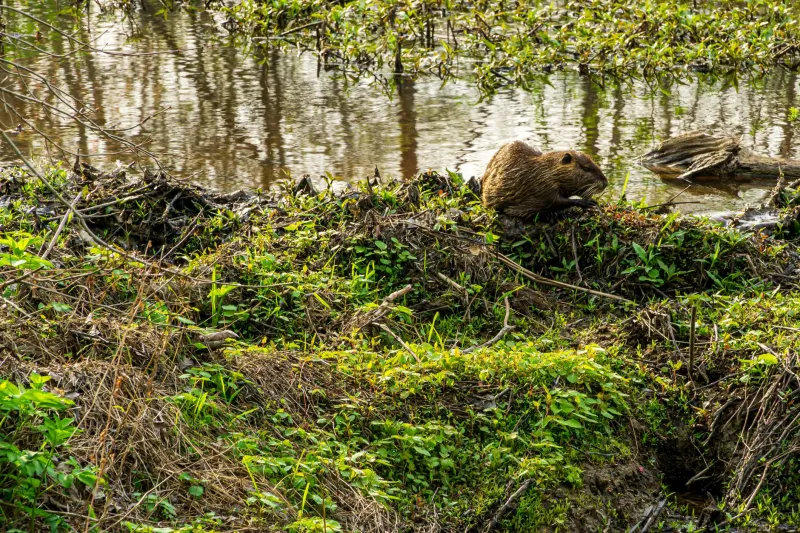
For most of the twentieth century, wildlife managers and agricultural interests treated the North American beaver (Castor canadensis) as a nuisance at best and a destructive pest at worst. Trapping programs, drainage projects, and land-use policies systematically reduced beaver populations across the continent, eliminating in the process an intricate network of natural water infrastructure that had taken thousands of years to develop. Today, as prolonged drought cycles intensify across the West and flood events grow more severe in the East, the scientific community is reexamining that legacy with considerable urgency—and the findings are difficult to ignore.
The beaver, it turns out, is not merely a charismatic mammal. It is a hydrological engineer whose activities reshape entire watersheds in ways that human-built infrastructure rarely replicates and almost never matches in cost-efficiency.
What Beaver Engineering Actually Does to a Watershed
When a beaver colony establishes itself along a stream corridor, the physical transformation begins almost immediately. Dams constructed from woody debris intercept surface flow, raising the local water table and spreading water laterally across the floodplain. The resulting pond complex does far more than create habitat for waterfowl and amphibians—though it does that too, with remarkable effectiveness.
Research published over the past two decades has documented a cascade of hydrological benefits that flow from beaver activity. Studies conducted across the intermountain West have found that beaver-occupied stream reaches retain significantly more water during dry seasons than comparable unoccupied reaches, with some research indicating that late-summer streamflow can increase by 30 percent or more downstream of active dam complexes. This effect, sometimes described as "slow water" or hydrograph attenuation, essentially extends the productive wet season for vegetation, fish, and the communities that depend on surface water supplies.
The soil-moisture dynamics are equally significant. As water percolates through beaver-created wetland soils, it recharges shallow aquifers that sustain riparian vegetation long after surface flows diminish. The dense, moisture-retaining plant communities that develop around beaver ponds—willows, sedges, cottonwoods, and native forbs—create what researchers term "wet meadow refugia," landscapes that remain green and biologically productive even during severe drought years. In fire-prone regions of the American West, these refugia have been documented functioning as natural firebreaks, dramatically reducing the rate and intensity at which wildfires spread through otherwise desiccated terrain.
On the opposite end of the hydrological spectrum, beaver systems also attenuate flood peaks. By storing large volumes of water in pond complexes and saturated soils, active beaver landscapes absorb precipitation pulses that would otherwise translate directly into downstream flooding. A 2020 study examining stream systems in the Pacific Northwest found that watersheds with robust beaver populations experienced measurably lower peak flood discharges following major precipitation events, a finding with direct implications for flood-damage costs and municipal water management.
Carbon, Sediment, and the Broader Ecosystem Ledger
The hydrological services provided by beaver engineering extend into biogeochemical processes that are increasingly relevant to climate policy. Beaver ponds accumulate organic sediment at high rates, effectively sequestering carbon that would otherwise remain in the active carbon cycle. Estimates of carbon storage in beaver-created wetland soils vary by region and soil type, but the cumulative potential across the American landscape is substantial—particularly given that historical beaver populations may have numbered between 60 and 400 million individuals across North America before European colonization and the subsequent fur trade decimated their numbers.
Sediment trapping represents another underappreciated service. In agricultural and post-disturbance landscapes where erosion rates are elevated, beaver ponds intercept fine particles and associated nutrients before they reach larger river systems. This filtration function reduces turbidity in downstream waterways, supports water quality in municipal watersheds, and limits the nutrient loading that drives harmful algal blooms in lakes and estuaries.
Biodiversity co-benefits compound these services. The structural complexity of beaver-engineered landscapes—open water, emergent marsh, wet meadow, and shrub-dominated riparian zones existing in close proximity—supports exceptionally high species richness relative to unmodified stream corridors. Amphibians, migratory waterfowl, neotropical songbirds, native fish, and invertebrate communities all respond positively to beaver presence, making active beaver restoration one of the most multi-functional interventions available in the restoration practitioner's toolkit.
The Policy Gap and the Practitioners Bridging It
Despite this accumulating body of evidence, policy frameworks governing beaver management in the United States remain largely misaligned with the science. In many western states, beaver removal permits are issued routinely in response to complaints from agricultural landowners or road departments, without systematic consideration of the watershed-scale consequences. Federal land management plans rarely incorporate beaver population objectives as explicit restoration targets, and state wildlife agencies frequently lack the staffing and resources to implement proactive translocation programs.
A growing network of restoration practitioners is working to bridge this gap. The Beaver Institute, the North American Beaver Society, and numerous state-level watershed coalitions have developed practical tools—including flow devices that allow beaver dams to coexist with road culverts and irrigation infrastructure—that reduce the conflicts driving removal requests. Techniques such as Beaver Dam Analogs (BDAs), in which restoration ecologists construct preliminary structures from natural materials to attract and retain beaver colonists, have shown considerable promise in accelerating rehydration of degraded stream systems across the arid West.
Federal programs including the USDA Natural Resources Conservation Service's Working Lands for Wildlife initiative have begun incorporating beaver-assisted restoration into funded conservation plans, and several western states have adopted formal beaver translocation protocols that redirect problem animals from conflict sites to suitable unoccupied habitat. These represent meaningful progress, but the scale of current effort remains modest relative to the ecological opportunity.
A Climate-Ready Investment
The case for prioritizing beaver conservation and restoration has never been stronger. As climate models project continued aridification across much of the American West and increased precipitation variability throughout the East, the water storage, flood attenuation, and drought-buffering functions of beaver-engineered landscapes represent precisely the kind of nature-based infrastructure that resource managers will need at scale.
The cost comparison with engineered alternatives is compelling. Constructed detention basins, stream channel modifications, and municipal water storage projects capable of delivering comparable hydrological services run into the millions of dollars per site. Beaver-assisted restoration, by contrast, leverages the animals' own labor and materials, with management costs typically limited to conflict-mitigation devices and monitoring programs.
What is required now is not a technological breakthrough but a policy realignment—one that treats beavers not as agricultural adversaries but as ecological partners whose engineering services warrant active protection and strategic deployment. That realignment will demand sustained engagement from the research community, federal and state agencies, agricultural landowners, and tribal nations whose water security is most directly at stake.
The science is clear. The question is whether American land management policy will catch up to it before the next drought cycle demonstrates, again, the cost of working without nature's most capable hydrologist.