Carbon Buried in Plain Sight: The Science of Freshwater Wetlands and the Policy Failures Letting It Escape
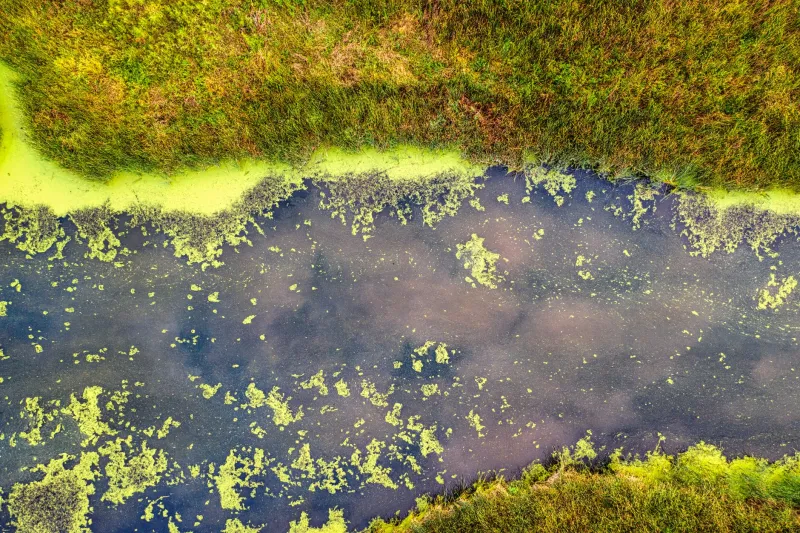
There is a quiet paradox at the heart of American climate policy. While federal and state governments have invested billions of dollars in forest carbon programs, reforestation initiatives, and timber management reforms, one of the most powerful carbon storage systems on the continent continues to be drained, filled, and converted at a rate that should alarm any serious climate scientist. Freshwater wetlands—marshes, bogs, fens, and seasonally flooded bottomlands—represent a disproportionate share of terrestrial carbon storage, and the United States has already lost more than half of its original wetland extent. The losses have not stopped.
Understanding why wetlands remain chronically underprotected, despite mounting evidence of their ecological and climatic importance, requires examining both the science and the institutional structures that govern land use in this country. Neither story is flattering.
The Carbon Math That Changes Everything
Wetlands occupy roughly 5 to 8 percent of the Earth's land surface, yet they are estimated to hold between 20 and 30 percent of all terrestrial carbon stocks. In the United States alone, freshwater wetlands store an estimated 11.5 billion metric tons of carbon—predominantly in the form of slowly decomposing organic matter locked within saturated, oxygen-depleted soils. This anaerobic environment suppresses microbial activity, creating conditions under which organic material accumulates over centuries rather than cycling back into the atmosphere within years, as it would in most upland forest systems.
By comparison, a temperate deciduous forest might sequester between one and three metric tons of carbon per hectare annually. A freshwater peatland, under optimal conditions, can accumulate carbon at a fraction of that rate—but it holds stocks that took thousands of years to build. The distinction matters enormously. When a wetland is drained for agricultural conversion or development, that ancient carbon reserve is exposed to aerobic decomposition and released within years to decades. The climate debt incurred is enormous and essentially irreversible on any policy-relevant timescale.
Recent research published through the National Wetlands Research Center and affiliated university programs has refined these estimates considerably, particularly with respect to regional variation. Freshwater forested wetlands in the southeastern United States—including the cypress-tupelo swamps of the Mississippi Alluvial Valley and the Atlantic coastal plain—emerge as especially significant carbon repositories, combining high biomass with deep organic soil horizons.
The Methane Complication
Any honest accounting of wetland carbon dynamics must grapple with methane, and here the science is genuinely complex. Wetlands are the single largest natural source of atmospheric methane, a greenhouse gas with a warming potential roughly 80 times that of carbon dioxide over a 20-year horizon. The same anaerobic conditions that enable long-term carbon sequestration also support methanogenic microbial communities that produce methane as a metabolic byproduct.
This reality has sometimes been weaponized in policy debates to argue against wetland protection—a rhetorical maneuver that reflects a selective reading of the evidence. Emerging research is clarifying the picture in important ways. Methane emissions vary dramatically across wetland types and hydrological regimes. Permanently flooded systems, such as deep freshwater marshes, tend to emit more methane than seasonally saturated systems like wet meadows or vernal pools. Peatlands in cooler northern climates—Minnesota's vast boreal bogs, for instance—emit comparatively modest methane while storing extraordinary quantities of carbon accumulated since the last glacial retreat.
Critically, recent modeling work incorporating both carbon dioxide and methane fluxes across wetland types consistently finds that most natural freshwater wetlands remain net climate benefits over decadal and centennial timescales, even when methane emissions are fully accounted for. The nuance lies in distinguishing between wetland types and management contexts—a distinction that blunt regulatory frameworks have historically failed to make.
Restored wetlands present a further complication. Studies conducted on restored agricultural wetlands in the Prairie Pothole Region of the Dakotas and Minnesota have documented elevated methane pulses during the initial years following restoration, as decomposable organic matter becomes available under newly anaerobic conditions. These emissions typically stabilize as the system matures, but the transitional period requires careful monitoring and should inform how restoration outcomes are measured and credited.
The Regulatory Architecture—and Its Gaps
The primary federal mechanism for wetland protection in the United States is Section 404 of the Clean Water Act, which requires permits for the discharge of dredged or fill material into navigable waters and their adjacent wetlands. In practice, the program has always been more permissive than its proponents intended. Permit approvals routinely rely on mitigation banking—a system allowing developers to destroy wetlands in one location in exchange for funding restoration elsewhere—with mixed evidence that such trades deliver equivalent ecological value.
The legal landscape has grown more precarious in recent years. The Supreme Court's 2023 decision in Sackett v. EPA substantially narrowed the definition of waters protected under the Clean Water Act, effectively removing federal jurisdiction over a significant portion of the nation's wetlands, including many isolated and seasonally connected systems that provide critical hydrological and carbon storage functions. The decision placed an estimated 50 to 60 percent of previously protected wetland area beyond the reach of federal permitting requirements.
The consequences are not hypothetical. Agricultural drainage, long the dominant driver of wetland loss in the Midwest and Southeast, has accelerated in regions where federal oversight has receded. Economic incentives embedded in federal farm programs—including crop insurance subsidies and commodity price supports—continue to make wetland conversion financially attractive for landowners, even as the same federal government nominally supports conservation goals through programs like the Wetlands Reserve Easement.
State-Level Leadership Filling the Vacuum
In the absence of robust federal protection, several states have moved to establish or strengthen their own wetland regulatory frameworks, with instructive results. Minnesota's Wetland Conservation Act, one of the most comprehensive state-level programs in the country, establishes a no-net-loss standard and requires replacement of drained wetlands at ratios designed to account for functional equivalency rather than mere acreage. Rigorous monitoring and a appeals process that engages local governments and conservation districts have helped build stakeholder legitimacy over three decades of implementation.
Maryland has similarly maintained strong state wetland protections that exceed federal minimums, incorporating climate resilience considerations into permit review criteria. The state's tidal and non-tidal wetland programs have been credited with stabilizing wetland extent along the Chesapeake Bay watershed, where wetlands serve dual roles as carbon sinks and water quality buffers.
Perhaps most significantly, several states are now exploring the integration of wetland carbon accounting into state greenhouse gas inventories and voluntary carbon markets—a development that could, if implemented rigorously, create direct economic incentives for private landowners to maintain or restore wetland hydrology. The scientific infrastructure for such accounting has matured considerably, with remote sensing platforms and soil carbon monitoring protocols now capable of supporting credible, landscape-scale carbon quantification.
A Conservation Imperative Hiding in Plain Sight
The case for prioritizing freshwater wetland protection within America's broader climate and conservation agenda is, at this point, scientifically overwhelming. The barriers are not empirical—they are institutional, economic, and political. Drainage infrastructure subsidized by public funds, commodity markets that externalize ecological costs, and a federal regulatory framework weakened by judicial interpretation have collectively created a system that continues to liquidate a carbon asset of irreplaceable value.
Reversing this trajectory will require more than scientific consensus. It will require farm bill reforms that redirect incentives away from wetland conversion, state-level regulatory frameworks strong enough to fill the vacuum left by federal retrenchment, and carbon market mechanisms rigorous enough to translate wetland conservation into tangible economic returns for landowners. It will also require a willingness to engage honestly with the methane question—not to dismiss it, but to incorporate it into a more sophisticated accounting framework that reflects the genuine complexity of these systems.
America's freshwater wetlands have been draining away for nearly two centuries. The science tells us, with increasing precision, what we are losing. The harder question is whether the policy architecture can be rebuilt quickly enough to matter.