Stolen Darkness: The Ecological Cost of Artificial Night and the Science Working to Reclaim It
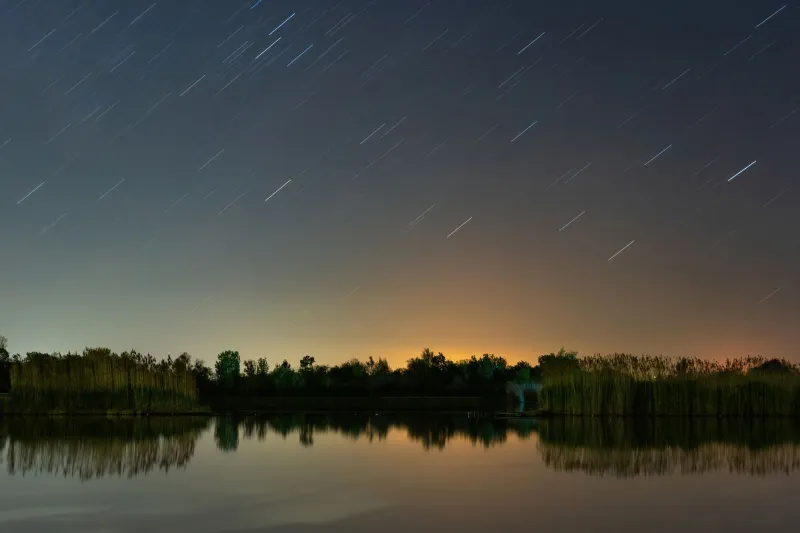
A Continent That Has Forgotten the Dark
For most of human history, night meant darkness—genuine, pervasive, ecologically functional darkness. Today, satellite imagery of the contiguous United States reveals a landscape where true darkness has become a scarce resource. More than 99 percent of Americans live under skies measurably brightened by artificial light, and approximately one-third of the country's population can no longer see the Milky Way from their homes. These are not merely aesthetic losses. They represent a fundamental restructuring of the environmental conditions under which tens of thousands of species evolved.
Artificial light at night—referred to in the scientific literature as ALAN—now ranks among the most pervasive and least regulated forms of environmental alteration in the industrialized world. Unlike chemical pollutants, it leaves no residue that can be sampled or catalogued. Unlike habitat fragmentation, it does not appear on land-use maps. Yet its ecological footprint is vast, and the body of research documenting its consequences has grown substantially over the past two decades, demanding that conservation science and environmental policy treat nighttime illumination with the same urgency afforded to more visible threats.
Insects at the Intersection of Light and Catastrophe
No taxonomic group illustrates the dangers of ALAN more starkly than insects. The familiar phenomenon of moths orbiting a porch light represents only the most visible expression of a far deeper problem. Phototaxis—the instinctive orientation of insects toward light sources—evolved in a world where the brightest nocturnal object was the moon, a directionally stable cue that facilitated navigation across landscapes. Artificial lights shatter this navigational logic entirely.
Research published in Insect Conservation and Diversity and corroborated by field studies conducted across the American Midwest and Southeast has demonstrated that roadside and agricultural lighting dramatically reduces the abundance of nocturnal insects in surrounding habitats, with documented declines in moth populations near high-intensity light sources exceeding 50 percent in certain studies. These are not peripheral species. Moths serve as primary pollinators for numerous native plant communities after dark, and their larvae constitute a critical food source for forest-floor invertebrates, ground-nesting birds, and small mammals.
The implications extend upstream through food webs with troubling efficiency. When moth populations collapse around persistent light sources, the plants they pollinate reproduce less successfully, and the predators that depend on caterpillar biomass during breeding seasons face nutritional shortfalls at precisely the moments of highest energetic demand.
Migratory Birds and the Trap of Illuminated Skylines
The relationship between artificial light and avian migration has attracted some of the most rigorous scientific attention in this field, and the findings are deeply concerning. An estimated three billion birds have been lost from North American populations since 1970, and while habitat loss and pesticide exposure account for substantial portions of that decline, ALAN has emerged as a significant and underappreciated contributor.
Nocturnally migrating songbirds—a category that encompasses the majority of North American migratory species—navigate using star patterns and geomagnetic cues. Artificial sky glow disrupts both. Illuminated urban centers create what researchers describe as "ecological traps," drawing birds off course and into environments where collision risk with glass structures is dramatically elevated. Cornell Lab of Ornithology data suggest that building collisions kill between 400 million and one billion birds annually in the United States, with nighttime collisions disproportionately concentrated in brightly lit urban corridors during spring and fall migration windows.
The geographic overlap between major US migration flyways and the country's most intensely illuminated metropolitan regions—the Gulf Coast, the Atlantic Seaboard, the Great Lakes corridor—means that ALAN operates as a systematic hazard at precisely the points where migratory birds are most concentrated and most physiologically stressed.
Predator-Prey Dynamics in the Altered Night
Beyond navigation and population-level effects, ALAN reshapes the behavioral ecology of darkness-dependent species in ways that reverberate across entire habitat communities. Many nocturnal predators—including owls, bobcats, and certain bat species—have evolved hunting strategies calibrated to low-light conditions. Artificial illumination effectively extends the functional day, compressing the temporal window in which prey species can forage with reduced detection risk.
Research conducted in riparian habitats across the American West has shown that artificially lit stream corridors alter the emergence timing of aquatic insects, which in turn disrupts foraging patterns for both bat species and riparian-zone birds. Brown trout in illuminated stream reaches have been documented exhibiting altered nocturnal feeding behavior, with cascading effects on invertebrate communities that constitute the base of stream food webs.
For prey species, chronic light exposure triggers persistent physiological stress responses. Studies examining white-footed mice and deer mice in semi-urban habitats have found elevated corticosterone levels in individuals occupying brighter environments, suggesting that ALAN imposes measurable endocrine costs even when behavioral responses appear superficially normal. These hormonal disruptions affect immune function, reproductive success, and long-term survival in ways that population models are only beginning to incorporate.
Circadian Disruption at the Ecosystem Scale
What distinguishes ALAN from many other environmental stressors is its capacity to operate at the level of biological timing itself. Circadian rhythms—the roughly 24-hour internal clocks that regulate physiology and behavior across virtually all complex life forms—are entrained primarily by the light-dark cycle. When that cycle is artificially compressed or distorted, the consequences manifest not just in individual organisms but in the phenological synchrony that holds ecological communities together.
Trees in urban environments exposed to persistent nighttime lighting have been documented leafing out earlier in spring and retaining foliage longer in autumn than their counterparts in darker rural settings. These shifts in plant phenology alter the timing of insect emergence, which in turn affects the food availability windows that migratory birds have evolved to exploit. The result is a progressive desynchronization—what ecologists term "phenological mismatch"—that can reduce reproductive success across multiple trophic levels simultaneously.
Policy Responses and the Promise of Lighting Reform
The scientific case for treating darkness as a conservation resource is now sufficiently robust to support meaningful policy action, and several US jurisdictions are beginning to respond. Tucson, Arizona, which has maintained one of the nation's most stringent outdoor lighting ordinances since the 1970s—initially motivated by the astronomical research needs of nearby observatories—has demonstrated that aggressive shielding requirements and spectrum restrictions are economically compatible with urban growth. The city's experience has informed subsequent ordinances in communities across the Southwest.
The International Dark-Sky Association, headquartered in Tucson, has certified more than 195 dark-sky places across the United States, including national parks, rural municipalities, and wildlife preserves. These designations are not merely symbolic. They establish enforceable lighting standards and have been shown to produce measurable reductions in sky brightness within designated boundaries.
On the agricultural front, a growing number of operations in the Pacific Northwest and Upper Midwest are transitioning from broad-spectrum white LED fixtures to amber-spectrum alternatives, which emit wavelengths substantially less disruptive to insect phototaxis and avian navigation. Preliminary monitoring data from these pilot programs suggest meaningful reductions in insect mortality near treated facilities, though long-term population-level assessments remain ongoing.
Federal engagement has been more cautious. The Migratory Bird Treaty Act provides theoretical legal cover for addressing light-induced collision mortality, but regulatory application has been inconsistent. Conservation advocates are increasingly calling for the US Fish and Wildlife Service to issue formal guidance that explicitly incorporates ALAN as a migratory bird threat, a step that would create meaningful accountability for high-impact light sources along major flyways.
Reclaiming the Night as an Ecological Imperative
Darkness is not an absence. It is an ecological condition—one that billions of years of evolution have shaped life to depend upon, exploit, and navigate. The systematic erosion of natural night cycles across the American landscape represents a form of habitat loss that conservation science has been slow to quantify but is now beginning to address with appropriate rigor.
The research emerging from this field makes clear that protecting nocturnal ecosystems requires the same integrative, science-driven approach that has guided successful forest and wetland conservation efforts. Lighting reform is not a peripheral concern for astronomers and romantics. It is a foundational element of ecological stewardship—one that demands institutional recognition, regulatory commitment, and the same evidence-based urgency that the broader conservation community has learned to apply to threats we can more easily see.