The Vanishing Intermediaries: How Industrial Agriculture Is Dismantling America's Pollinator Infrastructure—And the Science Pointing Toward Recovery
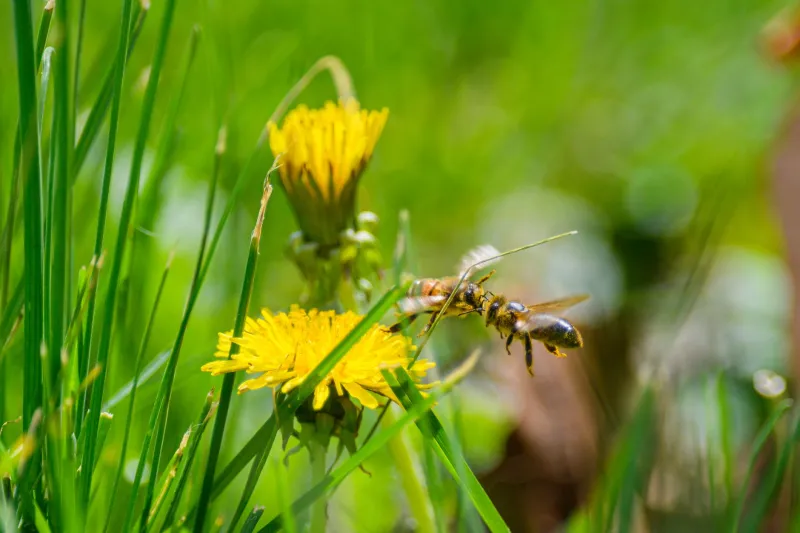
In 1962, Rachel Carson warned that a spring might come when no birds sang. More than six decades later, ecologists are documenting a quieter but equally consequential unraveling—one measured not in birdsong but in the absence of wingbeats across America's agricultural landscapes. The insects responsible for pollinating roughly 35 percent of global food crops are vanishing, and the primary driver is not mysterious: it is the industrial farming system that feeds the country.
Recent data from the U.S. Department of Agriculture and independent entomological surveys paint a troubling picture. Managed honeybee colonies have suffered annual losses averaging between 30 and 40 percent over the past decade—figures that beekeepers and researchers describe as economically and ecologically unsustainable. Wild bee populations tell an even starker story. A 2019 analysis published in One Ecosystem found that more than half of North America's 4,000 native bee species have experienced measurable range contractions since 1990, with some species showing population declines exceeding 90 percent in their historical strongholds.
Butterflies are faring no better. The monarch butterfly, perhaps the most culturally recognizable pollinator in the United States, has seen its overwintering population at California coastal sites drop by more than 99 percent compared to counts from the 1980s. The western population hovered near functional extinction thresholds as recently as 2020, and while modest recoveries have been recorded in subsequent years, researchers caution against interpreting short-term fluctuations as evidence of systemic stabilization.
The Architecture of Collapse
Understanding pollinator decline requires examining not a single cause but a reinforcing cascade of pressures that industrial agriculture has introduced into previously diverse rural landscapes.
Neonicotinoid insecticides—a class of systemic pesticides that permeate plant tissue and persist in soil and water—have attracted the most scientific scrutiny. A landmark 2017 field study conducted across farms in the United Kingdom, Germany, and Hungary, and subsequently replicated in North American contexts, demonstrated that neonicotinoid exposure significantly impairs bee reproduction, foraging navigation, and colony immune response. Crucially, sublethal doses—concentrations too low to kill individual insects outright—were shown to compromise the behavioral and physiological systems that colonies depend upon for long-term survival. In the United States, neonicotinoids are applied to the seeds of more than 140 million acres of corn, soybeans, and other commodity crops annually, making exposure virtually unavoidable for pollinators foraging in agricultural regions.
Yet pesticides alone do not explain the magnitude of what researchers are observing. Monoculture farming—the practice of cultivating single crop varieties across vast, contiguous acreages—has effectively eliminated the floral diversity that sustains pollinator communities across time. A honeybee colony requires access to diverse pollen sources throughout the foraging season to maintain nutritional balance and immune competence. A landscape composed entirely of corn, which is wind-pollinated and offers pollinators nothing, or soybeans that bloom for only a few weeks, cannot support robust populations regardless of pesticide load.
Compounding both pressures is the systematic removal of habitat features that once provided refuge within and around agricultural land. Hedgerows, wildflower meadows, fencerow vegetation, and wetland margins have been cleared at accelerating rates as farm consolidation has incentivized the maximization of cultivated acreage. The USDA's Economic Research Service estimates that the United States lost more than 53 million acres of grassland and other semi-natural habitat between 2008 and 2012 alone—much of it converted to row crop production in response to commodity price incentives.
What the Research Is Revealing
The scientific community's response to this crisis has been substantial, and a coherent picture of both mechanisms and solutions is beginning to emerge from the literature.
Research teams at the University of California, Davis, and the Xerces Society for Invertebrate Conservation have demonstrated that establishing native wildflower plantings along field margins—strips as narrow as three to six meters—can meaningfully increase wild bee abundance and diversity within adjacent crop fields. A multi-year study in California's Central Valley found that farms incorporating hedgerow restoration into their management plans supported 2.5 times greater native bee richness than conventionally managed neighbors, with measurable improvements in crop pollination services.
In the Midwest, researchers affiliated with the Natural Resources Conservation Service have been evaluating the ecological returns of Conservation Reserve Program (CRP) enrollment, which compensates farmers for converting marginal cropland to perennial vegetation. Analysis of CRP parcels seeded with native pollinator mixes has shown colonization by multiple bumble bee species within two to three growing seasons, including some species experiencing regional decline. These findings carry particular policy significance given that CRP enrollment has contracted by nearly 25 percent from its peak levels, a reduction driven by commodity price dynamics and program funding constraints.
Emerging work on pesticide exposure pathways is also reshaping how researchers think about mitigation. Studies from Purdue University have documented that neonicotinoid-laden dust generated during pneumatic planting of treated seeds disperses well beyond field boundaries, contaminating flowering vegetation in adjacent natural areas. This finding has prompted calls for mandatory adoption of seed lubricant alternatives that reduce particulate dispersion—a technically feasible modification that the agrochemical industry has resisted without regulatory compulsion.
Farms That Are Demonstrating an Alternative
Beyond the laboratory, a growing cohort of American farmers is providing proof-of-concept evidence that productive agriculture and pollinator stewardship are not mutually exclusive.
In the Willamette Valley of Oregon—a region that produces a significant share of the nation's grass seed and specialty crops—a network of farms participating in the Pollinator Partnership's Honey Bee Best Management Practices program has documented measurable improvements in both native bee populations and crop yield stability. Participating growers have adopted pesticide application timing protocols that avoid bloom periods, established native plantings on field margins, and reduced neonicotinoid seed treatments on crops where their efficacy data is weakest. Early economic analyses suggest that reduced input costs partially offset any yield adjustments, complicating industry narratives that position pollinator-friendly practices as financially prohibitive.
In Pennsylvania's agricultural counties, the state's Department of Agriculture has partnered with Penn State Extension to pilot a hedgerow restoration initiative that has now enrolled more than 400 farms. Participating operations receive technical assistance and cost-share funding to establish native shrub and wildflower corridors. Monitoring conducted in collaboration with Penn State's Center for Pollinator Research has recorded colonization by seven bumble bee species across enrolled farms, including Bombus pensylvanicus, a species of conservation concern across its eastern range.
Policy Levers and the Regulatory Gap
The scientific consensus on pollinator decline is robust, yet the policy response in the United States has remained fragmented and inadequate relative to the scale of the problem. The Environmental Protection Agency's registration review process for neonicotinoids has proceeded slowly, and interim decisions issued in 2020 imposed only modest use restrictions despite acknowledging significant ecological risk. Advocates argue that the agency's risk assessment framework systematically underweights sublethal and landscape-scale effects, producing regulatory conclusions that diverge from what peer-reviewed science supports.
The Farm Bill—reauthorized periodically by Congress and representing the primary federal instrument for shaping agricultural land use—contains provisions that could substantially benefit pollinators if adequately funded and strategically targeted. Conservation title programs, including the Environmental Quality Incentives Program and CRP, offer financial pathways for habitat establishment and pesticide reduction. However, conservation funding has consistently competed against commodity title expenditures and has historically been underfunded relative to demonstrated ecological need.
Progressive agricultural policy analysts contend that mandatory pollinator protection standards—modeled on frameworks already implemented in the European Union, which has imposed broad restrictions on neonicotinoid use in outdoor settings since 2018—represent the most direct regulatory pathway to population-level recovery. In the absence of such federal action, a small number of states, including California and Maryland, have enacted their own restrictions on consumer-grade neonicotinoid products, though agricultural applications remain largely unregulated at the state level.
A System-Level Problem Requires a System-Level Response
The decline of America's pollinators is not an isolated ecological curiosity. It is a diagnostic signal—evidence that the industrial agricultural system has externalized costs onto the natural infrastructure that ultimately sustains food production itself. The entomological research is unambiguous: current trajectories threaten not only wild ecosystem function but the long-term viability of the crop pollination services upon which American agriculture depends.
The solutions are technically available. Reduced-risk pesticide protocols, diversified crop rotations, strategic habitat restoration, and reformed federal conservation incentives have each demonstrated measurable ecological returns in controlled and real-world settings. What remains insufficient is the political and institutional will to implement them at the scale the science demands.
For those engaged in ecological research, natural resource management, and environmental policy advocacy, the pollinator crisis represents both an urgent challenge and an opportunity to demonstrate that evidence-based stewardship can reshape agricultural landscapes in ways that benefit ecosystems and food systems simultaneously. The intermediaries are vanishing. Whether they are allowed to continue vanishing is, ultimately, a policy choice.