Silenced Rivers: The Accelerating Extinction of North America's Freshwater Mussels and the Science That Could Save Them
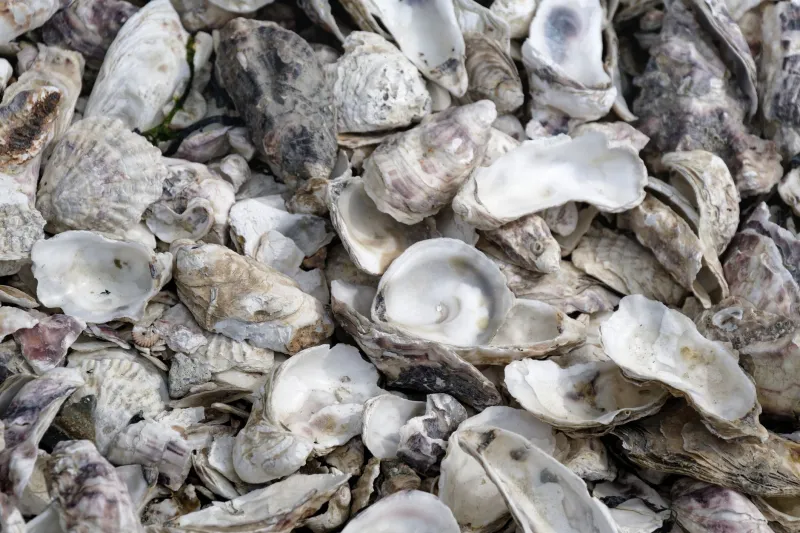
Beneath the riffles and pools of America's river systems, a largely invisible ecological catastrophe is compounding with each passing decade. Freshwater mussels—bivalves that spend most of their lives partially buried in riverbed sediments—represent one of the most imperiled groups of organisms on the continent. The United States and Canada together support approximately 300 native species, a figure that represents nearly one-third of the world's total freshwater mussel diversity. Yet according to assessments by the Nature Conservancy and the U.S. Fish and Wildlife Service, more than 70 percent of these species are considered extinct, threatened, or of special concern. The pace of loss has prompted leading malacologists to describe the situation as among the most severe vertebrate-comparable extinction crises in North American ecological history—a characterization that still receives only a fraction of the conservation attention directed toward charismatic megafauna.
Understanding why mussels matter ecologically is prerequisite to understanding why their disappearance constitutes a systemic threat rather than merely a taxonomic one.
Engineers of the River Bottom
Freshwater mussels are not passive inhabitants of aquatic systems. They are, in the language of ecological science, ecosystem engineers—organisms whose physical activities and biological processes substantially modify their surrounding habitat in ways that benefit other species. A single adult mussel can filter between 10 and 15 gallons of water per day, removing suspended particles, excess nutrients, algae, and certain contaminants from the water column. Dense mussel beds, which once extended for miles in major river systems like the Tennessee, Cumberland, and upper Mississippi, functioned as biological water-treatment infrastructure of extraordinary scale.
Beyond filtration, mussels stabilize riverbed sediments, reducing turbidity and creating the clean gravel conditions that many fish species require for spawning. Their shells, both living and post-mortem, provide hard substrate in an otherwise soft-bottomed environment, supporting communities of invertebrates, algae, and microorganisms. Excretion of nutrients in bioavailable form further stimulates primary productivity in the immediate vicinity of mussel beds. In aggregate, these functions make healthy mussel populations a structural foundation for broader aquatic community health—their loss cascades upward through food webs in ways that are still being quantified by freshwater ecologists.
Four Drivers of an Ongoing Collapse
The forces responsible for mussel decline are multiple and frequently synergistic, which partly explains why recovery has proven so elusive even where individual stressors have been partially addressed.
Dam construction and hydrological alteration rank among the most historically significant drivers. The impoundment of American rivers throughout the twentieth century—particularly the systematic damming of the Tennessee River system by the Tennessee Valley Authority beginning in the 1930s—destroyed vast stretches of free-flowing habitat and severed the connectivity that mussel populations require for reproduction. Mussels reproduce through a parasitic larval stage: their larvae, called glochidia, must attach to the gills or fins of specific host fish species to complete development. Dams fragment fish populations, eliminate migratory corridors, and alter flow regimes in ways that disrupt this obligate relationship, effectively sterilizing mussel populations even when adult animals survive.
Nonpoint source pollution, particularly agricultural runoff laden with nitrogen, phosphorus, and sediment, degrades water quality across vast swaths of the mussel-rich central and southeastern United States. Elevated turbidity smothers filter-feeding animals and disrupts larval settlement. Hypoxic conditions created by nutrient loading kill adults directly. Research published in Freshwater Biology and related journals has consistently documented the correlation between agricultural land use intensity in a watershed and the severity of mussel community impoverishment downstream.
Invasive species, most notably the zebra mussel (Dreissena polymorpha) and its close relative the quagga mussel, have devastated native mussel populations in large portions of the Great Lakes basin and the Mississippi River drainage. These Eurasian invaders attach directly to native mussel shells in densities that prevent feeding, movement, and reproduction, effectively smothering entire native beds within a few seasons of colonization. The geographic range of zebra mussels continues to expand, and their arrival in any watershed is now treated by conservation practitioners as a near-certain death sentence for the native mussel community.
Habitat degradation through channelization, gravel mining, and riparian deforestation removes or destabilizes the physical substrate that mussels require. The loss of forested riparian buffers, in particular, accelerates bank erosion, increases sediment loads, and eliminates the shading that moderates water temperature—a growing concern as climate change pushes thermal thresholds in shallow rivers toward the physiological limits of cold-adapted species.
What Conservation Science Is Doing
Despite the severity of the situation, researchers and resource managers have developed a toolkit of interventions that have demonstrated meaningful success in targeted applications.
Captive propagation programs, operated through partnerships between state wildlife agencies, universities, and facilities like the U.S. Fish and Wildlife Service's Warm Springs Fish Technology Center in Georgia and the Genoa National Fish Hatchery in Wisconsin, have successfully reared imperiled mussel species in controlled settings and released juvenile animals into restored or protected river reaches. The technical challenge of these programs is considerable—managers must maintain populations of appropriate host fish, time glochidia infestations precisely, and rear larvae through a vulnerable juvenile stage—but survival rates and genetic diversity outcomes have improved substantially as protocols have matured.
Host-fish reintroduction represents a complementary strategy. In rivers where target fish species have been extirpated by historical barriers or overharvest, restoring those populations directly addresses the reproductive bottleneck that limits mussel recovery. Collaborative work on the Clinch River in Virginia and Tennessee, one of the most biologically significant river systems in the temperate world, has demonstrated that coordinated fish and mussel management can produce measurable improvements in mussel recruitment when habitat conditions are otherwise adequate.
Dam removal, increasingly recognized as a watershed-scale restoration tool, has benefited mussel populations in several documented cases. The removal of the Elwha and Glines Canyon dams in Washington State, while focused primarily on salmon recovery, created opportunities for researchers to examine colonization dynamics in newly free-flowing reaches. In the eastern United States, smaller dam removals on rivers in the Appalachian foothills region have reopened fish passage corridors that support mussel reproduction across previously isolated stretches.
The Policy Gap That Remains
Scientific capacity for mussel conservation has advanced considerably over the past two decades. The policy architecture supporting that science has not kept pace. The Endangered Species Act provides legal protection for listed mussel species, but the listing process itself lags far behind the rate of documented decline—dozens of species in urgent need of federal protection remain unlisted, their habitats unshielded from the development and agricultural activities that continue to degrade them.
Section 404 of the Clean Water Act, which governs discharge of dredged or fill material into waterways, theoretically offers protection for mussel habitat, but enforcement inconsistency and the narrowing of jurisdictional scope following recent Supreme Court decisions have weakened its practical application. The rollback of federal protections for ephemeral and intermittent streams—waters that are often critical to the hydrological integrity of mussel-bearing river systems—represents a particularly consequential policy regression.
Conservation researchers and advocacy organizations including the Xerces Society and the American Fisheries Society have called for expanded funding under the Recovering America's Wildlife Act, which would direct dedicated resources toward state-managed conservation programs for species of greatest conservation need, including freshwater mussels. Passage and full funding of that legislation would represent the most significant policy advance for freshwater invertebrate conservation in a generation.
A Constituency for the Unseen
Perhaps the most persistent challenge in freshwater mussel conservation is one of public awareness. Unlike forest birds, large mammals, or even charismatic fish like salmon, mussels generate little popular identification. They are small, slow-moving, and spend most of their lives concealed beneath sediment in waters that few people observe closely. Building a conservation constituency for organisms that are functionally invisible requires sustained scientific communication and deliberate outreach—precisely the work that the freshwater research community has increasingly recognized as inseparable from the technical work of species recovery.
The ecological argument for protecting freshwater mussels is, in the end, also an argument for protecting the rivers themselves: their water quality, their biological complexity, their capacity to sustain the human communities that depend on them. A river system that has lost its mussels has lost something fundamental—a set of ecological processes that no engineered substitute can adequately replace. Recovering what remains is both an urgent scientific priority and an expression of the broader commitment to ecological stewardship that defines serious environmental policy in the twenty-first century.