Good Fire, Bad Risk: How Liability and Insurance Keep Cultural Burning Off the Land
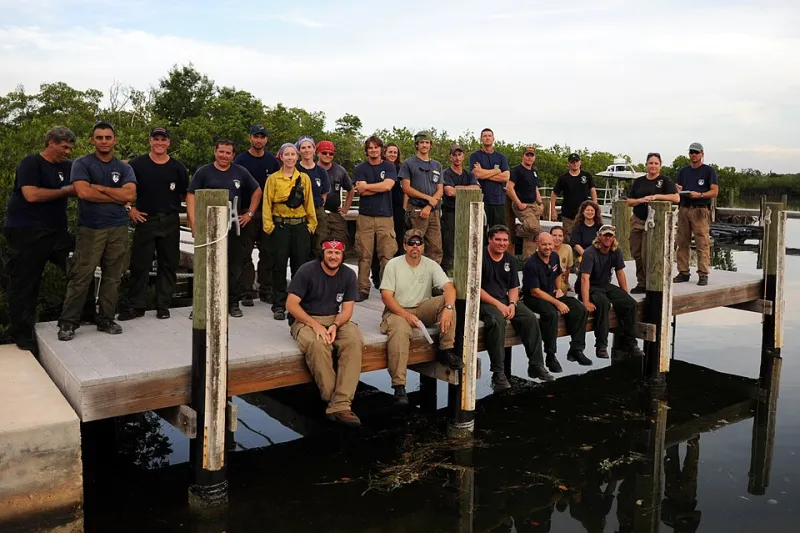
Photo: Department of the Interior. U.S. Fish and Wildlife Service. National Conservation Training Center. 10/1997-8888, Public domain, via Wikimedia Commons
The case for good fire is no longer ecologically controversial. Decades of research and hard experience have shown that prescribed burning and Indigenous cultural burning can reduce fuel loads, restore open forest structure, improve forage and habitat, and lower the probability of the catastrophic fires that now dominate public attention. Yet across much of the United States, the limiting factor is not fuel science, seed mix, or even public appetite. It is the paperwork of risk.
That paperwork is not neutral. Liability rules, insurance underwriting, certification requirements, air-quality permitting, and agency review processes were built largely around a single goal: avoiding escaped fire. They treat every ignition as a potential catastrophe and every burner as a potential defendant. The result is a system that rewards suppression and penalizes stewardship, even when the stewardship is exactly what public-safety policy says it wants.
The Evidence Is Not the Bottleneck
Federal and state agencies have produced shelf after shelf of plans calling for more prescribed fire. Tribes such as the Karuk, Yurok, and others in the Pacific West have maintained cultural burning traditions that predate the agencies now regulating them. Private landowners in the Southeast have used controlled burns for wildlife and timber management for generations. The science is not ambiguous: good fire, applied at the right time and scale, can be a tool for resilience.
The bottleneck is institutional. A certified burn manager may need to satisfy one set of rules on private land, another on federal land, and a third when smoke crosses a county line. An insurer may exclude prescribed fire from a general liability policy or price it as if every burn were a wildland catastrophe. A tribe may find that its cultural burning practices do not fit neatly into a state certification system designed for industrial forestry. A small landowner may decide that the ecological benefits are not worth the legal exposure if a neighbor objects to smoke or a single ember crosses a property line.
A Risk System Built for Suppression
Liability standards vary by state, but the pattern is familiar. Some states apply strict liability to escaped prescribed fire; others use a negligence standard. Some offer limited protections for certified burners; many do not. Insurance markets tend to treat fire as a catastrophic exposure rather than a managed ecological process. Public agencies can often self-insure or absorb risk through sovereign immunity. Tribes and small landowners usually cannot.
This is not because good fire is inherently uninsurable. It is because current underwriting categories do not distinguish between a carefully planned burn under favorable weather and a wildfire driven by wind and drought. The distinction matters. A prescribed burn with a written plan, trained crew, adequate holding resources, and a favorable smoke forecast is a different risk object than an unplanned ignition. Policy and insurance have not caught up with that difference.
Tribes, Landowners, and the Paperwork of Good Fire
For tribal nations, the problem is compounded by sovereignty and consultation. Cultural burning is not simply prescribed fire with a different name. It is place-based stewardship, often tied to foods, medicines, basketry materials, and ceremonies. State certification regimes may not recognize tribal knowledge or tribal authority. Insurance requirements imposed by outside entities can conflict with the timing and scale of traditional practices. Even when agencies express support, the procedural path can be long enough to miss the weather window.
Private landowners face a different version of the same trap. A family forest owner may want to burn to reduce fuel and improve habitat, but the local fire department may lack capacity, the state may require a permit that takes weeks to process, and the insurance policy may not cover the operation. Neighbors may worry about smoke. The result is a quiet disincentive: the landowner does nothing, fuels accumulate, and the eventual wildfire is far more dangerous than the controlled burn would have been.
What a 2026 Reset Could Look Like
A serious policy reset would begin by naming the problem correctly. Good fire is not a private hobby or a regulatory nuisance. It is a public-safety service and an ecosystem service. That reframing implies several concrete changes.
First, states and tribes should develop reciprocal certification and liability frameworks for qualified burners. A certified burn manager who meets rigorous training and planning standards should not face a patchwork of incompatible rules across jurisdictions. Second, liability protection should be tied to adherence to an approved burn plan, not to the mere fact that fire was used. Third, public funding should support prescribed fire crews, equipment, monitoring, and insurance pools—especially for tribes and small landowners who cannot absorb catastrophic risk alone.
Agencies also need to streamline permitting and smoke management without abandoning public-health protections. Cultural burn agreements should be negotiated with tribal nations as government-to-government arrangements, not as one-off permits. And insurers should be invited to develop products that recognize managed fire as a risk-reduction practice rather than a liability to be excluded.
The alternative is to keep spending billions on suppression while making stewardship legally and financially irrational. In 2026, with fire seasons lengthening and fuel loads mounting, that is not a neutral choice. It is a policy failure with a smoke plume.
Good fire will never be risk-free. But the current system does not eliminate risk; it redistributes it onto the people who are trying to reduce it. A 2026 reset should make the safe use of fire easier than the unsafe accumulation of fuel. Until then, the most important firebreak in American forestry may be the one built out of liability clauses.