The Old-Growth Question: Why a Forest Label That Shapes Policy Remains Scientifically Unsettled
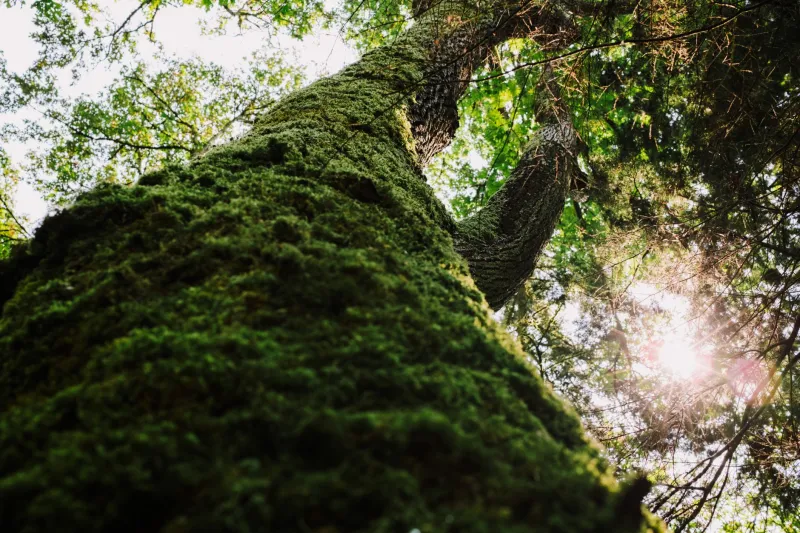
In American forest policy, few phrases carry as much moral and legal weight as old growth. It evokes cathedral canopies, deep duff, and a semblance of permanence. But when agencies, scientists, and advocates sit down to decide which acres qualify, the term becomes less a biological fact than a negotiated boundary. In 2026, as federal agencies move from announcing old-growth protections to implementing them, that boundary matters more than ever.
A Label Built From Many Histories
Old growth has never been a single ecological type. In Pacific Northwest conifer forests, it may mean centuries-old Douglas fir, western hemlock, and cedar with a multilayered canopy and large downed wood. In eastern hardwood forests, it can mean remnant stands that escaped plow and saw, or recovering forests with old trees but young overall structure. In dry western pine forests, frequent low-severity fire historically kept stands open; there, old growth may be less about density than about large fire-resistant trees and spatial pattern.
Scientists often rely on multiple indicators: tree age and size, snags, coarse woody debris, canopy gaps, understory diversity, soil conditions, and disturbance history. No single threshold captures all of them. A stand can be old in years but simple in structure, or younger but rich in legacies such as deadwood and deep organic soil. That complexity is exactly what makes old growth ecologically meaningful—and exactly what makes it hard to reduce to a checkbox.
What the Science Measures
Research consistently finds that older forests tend to support more complex habitat, greater structural diversity, and substantial carbon storage. But the relationship is not linear. A 150-year-old stand may host some old-growth features while lacking others. A mature forest recovering from past logging can accrue carbon rapidly even if it does not yet resemble reference old growth. This is why many ecologists prefer gradients and categories such as late-successional, mature, and old growth rather than a binary.
The science also complicates romantic assumptions: old growth is not static. It burns, blows down, floods, and regenerates. Its value lies partly in continuity and legacies—large trees, deep organic soils, deadwood, and species that depend on them. Protecting old growth therefore means protecting processes, not just a snapshot of trees.
The Gap Between Old and Mature
The political trouble is that policy often needs bright lines. If protections apply only to stands that meet a strict old-growth definition, mature forests that could become old growth may be left outside. Those stands are not interchangeable with young plantations, but they are also not yet irreplaceable. Conservation scientists have argued for protecting mature forests as the old growth of the future, especially where logging pressure or development threatens them. Critics worry that expanding the category could dilute the meaning of old growth or invite litigation. The result is a familiar policy trap: definitions narrow enough to be defensible may be too narrow to protect the ecological process.
Mapping the Unmapped
Implementation in 2026 hinges on inventory. Federal agencies have been building old-growth datasets, but maps are uneven. Remote sensing can detect canopy height and some structural features, yet it struggles with age, disturbance history, and understory condition. Field plots are expensive and sparse. Agency inventories may use different criteria, and private or tribal lands are often outside the picture. Tribal knowledge and cultural landscapes add another dimension that standard inventories often miss. Without a shared, transparent framework, the same stand can appear old growth on one map and mature on another.
The 2026 Test
The current federal push has shifted debate from whether old growth matters to how protection will work on the ground. That means confronting wildfire risk, insect outbreaks, recreation pressure, and the needs of communities adjacent to protected forests. It also means avoiding a false choice between preservation and stewardship. In fire-adapted forests, some old-growth stands may require careful fuel reduction or cultural burning to survive. In others, the safest course is to let natural processes proceed. The policy challenge is to design protections that are durable, scientifically credible, and flexible enough to accommodate ecological change.
A Definition That Can Carry Weight
The old-growth label will always be partly political because it allocates access, funding, and restraint. But it can be made more scientifically honest. Agencies should publish explicit criteria, map uncertainty, protect mature stands as future old growth, and involve tribal and local knowledge. Most importantly, they should stop treating the label as a finish line. Old growth is not a museum exhibit; it is an outcome of time, disturbance, and restraint. Protecting it means protecting the conditions that allow forests to grow old—not just the acres that already have.