What Fire Leaves Behind: Pyrogenic Carbon and the Long Memory of Forest Soils
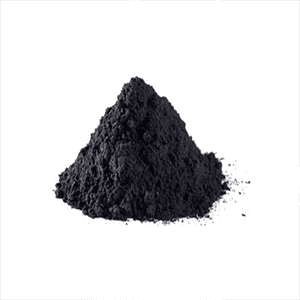
Photo: Mubychemcom, CC0, via Wikimedia Commons
When a forest burns, the obvious story is the one above ground: scorched trunks, blackened understory, smoke visible from space. The less obvious story is in the soil. Fire creates pyrogenic carbon, a category that includes charcoal, soot, and other carbonized residues. These materials can persist for decades to centuries, influencing how water moves, how nutrients are retained, and how carbon is counted. In 2026, as wildfire regimes shift and prescribed fire becomes a larger part of federal and state management, pyrogenic carbon is moving from the margins of soil science toward the center of forest policy.
The Chemistry of Charcoal
Pyrogenic carbon forms when organic matter is heated in the absence or near-absence of oxygen. Complete combustion turns carbon into carbon dioxide; incomplete combustion leaves behind aromatic structures that are more resistant to decomposition than ordinary plant litter. Charcoal is the most familiar form, but pyrogenic carbon also includes soot particles and partially charred residues.
The key property is recalcitrance. Pyrogenic carbon is not inert, but it turns over much more slowly than fresh litter. Its aromatic rings resist microbial attack, and its porous structure can adsorb organic molecules and nutrients. In forest soils, charcoal can persist for centuries, although its stability depends on fire temperature, fuel type, soil conditions, and post-fire erosion.
Water, Nutrients, and Microbial Habitat
Pyrogenic carbon is not just a passive store of carbon. It changes soil physics and chemistry. Charcoal increases porosity and water-holding capacity in some soils, which can affect infiltration and plant water availability after fire. It can also adsorb dissolved organic matter and nutrients, reducing leaching losses. In nutrient-poor forests, these effects may matter for post-fire recovery.
Microbial communities respond as well. Charcoal surfaces can provide habitat and alter pH, and some microorganisms use pyrogenic carbon as a substrate. The ecological effects are not uniformly positive. Pyrogenic carbon can also adsorb herbicides or pollutants, and its influence on soil hydrology depends on the amount, particle size, and distribution of the material.
Fire Suppression and the Missing Legacy
For much of the twentieth century, fire suppression in many American forests reduced the frequency of low- and mixed-severity fire. That changed the production and distribution of pyrogenic carbon. In forests that historically burned frequently, suppression may have reduced charcoal inputs to soils, while fuel accumulation increased the risk of severe fire that produces different pyrogenic carbon signatures.
Prescribed fire is often described as a restoration tool, and it is. But it is also a pyrogenic carbon management tool. Low-severity prescribed burns can produce charcoal that remains in place, whereas high-severity wildfire can consume more of the forest floor and increase erosion, moving carbon downslope and into waterways. The distinction matters for carbon accounting: not all fire-derived carbon stays in the forest, and not all of it is equally stable.
The Accounting Problem
Carbon markets and greenhouse gas inventories have a pyrogenic carbon blind spot. Most forest carbon models treat fire as a loss of biomass and a pulse of emissions, but they do not consistently track the formation and persistence of pyrogenic carbon. That can lead to double counting or undercounting. If charcoal remains in the soil for centuries, it is not the same as carbon that returns to the atmosphere immediately.
State and federal forest plans are beginning to recognize this complexity, but the tools are uneven. Soil carbon monitoring is expensive, and pyrogenic carbon is difficult to measure in the field. Remote sensing can detect fire severity, but it cannot easily quantify charcoal persistence. The result is a policy landscape in which a scientifically important pool is only partially visible.
What the Science Means for 2026 Management
For forest managers, the implications are practical. Prescribed fire planning should consider not only fuel reduction and ecological restoration but also the fate of pyrogenic carbon. Post-fire restoration should protect soils from erosion, especially on steep slopes where charcoal can be washed away. Carbon accounting should include pyrogenic carbon as a distinct pool, with clear assumptions about stability and residence time.
For policymakers, the message is that fire is not simply a destructive event. It is a soil-forming process. The pyrogenic carbon left behind by fire is part of the long memory of a forest, and it interacts with climate policy, water quality, and biodiversity. In 2026, as the United States invests in wildfire resilience and prescribed fire, that memory should be part of the ledger.