When Sound Disappears: The Science of Noise Pollution and the Collapse of America's Acoustic Ecosystems
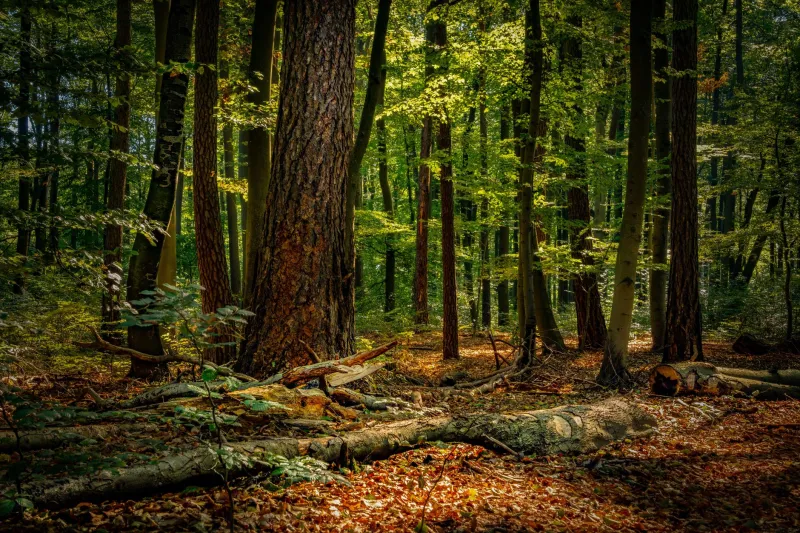
For most of human history, the sounds of the natural world—birdsong at dawn, the chorus of frogs at the edge of a marsh, the low stridulation of insects in a summer meadow—were simply background. Scientists are now making clear that this background is, in fact, foundational infrastructure. Acoustic environments are not incidental features of ecosystems; they are functional ones. And across the United States, that infrastructure is being dismantled, frequency by frequency, by the relentless expansion of anthropogenic noise.
The field of acoustic ecology has matured substantially over the past two decades, driven by researchers like Bernie Krause, who pioneered the concept of the soundscape as an ecological unit worthy of scientific scrutiny. What this discipline has revealed is both elegant and alarming: wild soundscapes are organized. Species partition the acoustic spectrum much as they partition physical habitat, communicating within specific frequency bands and time windows that minimize interference. When anthropogenic noise floods those bands, the consequences cascade through entire biological communities.
A Frequency Problem With Biological Consequences
Traffic noise, which dominates the low-frequency spectrum, is among the most pervasive and damaging forms of acoustic pollution affecting American wildlife. Research published over the past decade has documented that many songbird species respond to low-frequency noise masking by shifting their vocalizations upward in pitch—a behavioral adaptation that carries real costs. Males singing at artificially elevated frequencies are often perceived as less dominant or less fit by potential mates, undermining reproductive success even in populations that appear behaviorally flexible.
The effects extend well beyond birds. Freshwater fish, including several species of conservation concern in the Great Lakes and Appalachian river systems, rely on acoustic signaling during spawning. Studies have demonstrated that boat engine noise and underwater construction vibration disrupt spawning aggregations and reduce fertilization rates. Amphibians, whose chorus calls serve as both mating advertisements and community-level acoustic signals, show measurable declines in call complexity and timing precision in noise-polluted wetlands. Even bats—whose echolocation is a sophisticated acoustic technology—have been shown to lose foraging efficiency in habitats saturated with broadband anthropogenic noise.
Less intuitive but equally significant is the emerging evidence that noise pollution affects plant communities indirectly. Seed dispersers and pollinators whose behavior is altered by noise pressure change their movement patterns and habitat use, creating spatial mismatches between plant reproduction and the animals that support it. A 2012 study in the American Southwest documented that noise-driven changes in bird and rodent communities around natural gas compressor stations produced measurable differences in seedling recruitment and plant community composition over time.
Mapping the Quiet Places That Remain
The National Park Service's Natural Sounds and Night Skies Division has been systematically documenting acoustic conditions across protected lands, and the findings are sobering. A significant proportion of the contiguous United States experiences noise levels sufficient to double or triple the ambient acoustic environment at least once per day. Even within designated wilderness areas, aircraft overflights and distant highway noise penetrate what should be acoustically protected habitat.
This research has produced an increasingly granular picture of where genuine acoustic refuge still exists—and where it is most rapidly disappearing. The northern boreal forests of Minnesota and Michigan, certain stretches of the Intermountain West, and portions of the Gulf Coast's bottomland hardwoods retain relatively intact soundscapes. These areas represent not only biodiversity refugia in the conventional sense but acoustic refugia: places where species can still communicate, locate mates, detect predators, and navigate using the full complement of sensory information their biology depends on.
Identifying and protecting these acoustic refugia is a scientific priority that has not yet translated into meaningful policy. The Endangered Species Act, the Migratory Bird Treaty Act, and the Clean Air Act collectively provide no mechanism for regulating noise as a habitat stressor. The National Environmental Policy Act requires noise impact assessments for certain federal projects, but these assessments rarely engage with the subtler, cumulative effects that acoustic ecology research has now thoroughly documented.
Emerging Tools and the Restoration of Acoustic Habitat
Acoustic monitoring technology has advanced rapidly, making large-scale soundscape assessment increasingly feasible. Autonomous recording units deployed across landscapes can capture continuous acoustic data that, when processed through machine learning algorithms, yield detailed inventories of species presence, behavioral state, and community composition. Researchers at institutions including the Cornell Lab of Ornithology and Colorado State University have developed open-source platforms that allow land managers to assess acoustic habitat quality at scales previously impossible.
These tools are beginning to inform management decisions in meaningful ways. The US Forest Service has piloted acoustic monitoring in several national forests to evaluate the effects of road density on interior forest soundscapes, using the resulting data to guide timber sale layout and road decommissioning priorities. In the Pacific Northwest, acoustic assessments have become part of the site evaluation process for wind energy development, helping identify locations where turbine noise would most severely compromise raptor communication and territorial behavior.
Noise mitigation engineering offers another avenue for progress. Sound barriers, reduced speed limits, and modified road surfaces have all demonstrated measurable reductions in traffic noise in experimental contexts. Several European nations have implemented national quiet zone designations that restrict noise-generating activities in ecologically sensitive areas during critical biological periods—breeding seasons, migration windows, and amphibian emergence events. The United States has no analogous framework, though the scientific basis for one is now well established.
The Policy Gap That Science Has Already Closed
What acoustic ecology has accomplished over the past generation is remarkable: it has transformed an intuition—that natural quiet matters—into a rigorous, quantifiable science. Researchers can now measure acoustic habitat quality, model the population-level consequences of noise exposure, and identify the thresholds at which communication masking becomes biologically significant. The science is no longer the limiting factor.
The limiting factor is political will. Meaningful noise conservation policy in the United States would require agencies to treat acoustic conditions as habitat attributes subject to the same protective consideration as water quality or vegetation structure. It would require environmental impact processes to account for cumulative noise effects, not merely the immediate decibel levels at a project boundary. And it would require investment in the acoustic monitoring infrastructure necessary to track trends across the landscape over time.
None of this is technically beyond reach. What it requires is the institutional recognition that a forest from which the sound has been stripped is not, ecologically speaking, a forest at all. The science of acoustic ecology has earned that recognition. It is past time for American conservation policy to extend it.