Prairie Engineers Beneath Our Feet: The Forgotten Science of Fossorial Mammals and What Their Absence Costs Us
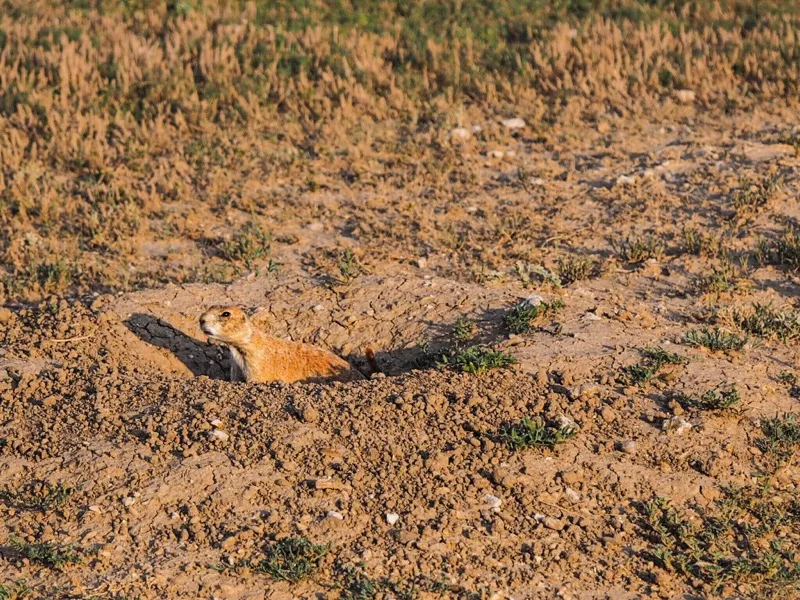
Photo: Mycatisnamedlunameowmeowmeow, CC BY-SA 4.0, via Wikimedia Commons
For much of the twentieth century, American land management treated burrowing mammals as adversaries. Prairie dog towns were poisoned across millions of acres of the Great Plains. Ground squirrel populations were suppressed throughout the intermountain West. Pocket gophers were trapped and fumigated wherever they appeared near agricultural operations. The logic was straightforward, if ecologically impoverished: these animals dug holes, damaged crops, and posed hazards to livestock. What that logic ignored—and what a growing body of scientific literature is now forcing us to confront—is that these species were not merely residents of grassland and semi-arid ecosystems. They were, and in surviving populations remain, their primary architects.
The Engineering Beneath the Surface
The term "ecosystem engineer" carries specific scientific meaning. It refers to organisms that physically modify their environment in ways that alter resource availability for other species. Beavers are perhaps the most celebrated example, but the fossorial mammals of America's interior—those adapted to life underground—perform an analogous function at the soil level, and at a scale that rivals anything occurring above ground.
Prairie dogs (Cynomys spp.) are the most thoroughly studied of these engineers. A single black-tailed prairie dog colony may maintain burrow systems extending three to fifteen feet below the surface, with lateral tunnels creating a labyrinthine network that fundamentally restructures soil porosity. Research published in ecological journals over the past two decades has documented that soils within active prairie dog towns exhibit dramatically higher infiltration rates than adjacent ungrazed or burrowing-free grasslands. In some measurements, water infiltration in colonized soils exceeds that of unoccupied control plots by a factor of three or more. During intense precipitation events—increasingly common in a destabilized climate—this difference is not academic. It determines whether rainfall enters the soil profile or runs off the surface, carrying topsoil and nutrients with it.
Ground squirrels, including the thirteen-lined ground squirrel (Ictidomys tridecemlineatus) and the Uinta ground squirrel (Urocitellus armatus) of the Rocky Mountain foothills, contribute similarly scaled effects at the local level. Their burrow entrances function as preferential infiltration points, and their seasonal caching and foraging behaviors redistribute organic material through the soil column in patterns that no abiotic process replicates.
Nutrient Cycling as a Secondary Function
The hydrological effects of burrowing are well-documented, but the nutrient dynamics are equally significant and less frequently discussed in policy contexts. Fossorial mammals are, in a meaningful sense, continuous soil processors. As they excavate, they mix soil horizons—bringing mineral-rich subsoil material to the surface while incorporating surface organic matter downward. This bioturbation accelerates decomposition, increases microbial activity, and creates microhabitat heterogeneity that supports a disproportionate diversity of soil invertebrates.
Studies conducted at prairie dog colonies across the shortgrass steppe of Colorado and New Mexico have found elevated nitrogen and phosphorus concentrations in colonized soils relative to adjacent areas, a pattern attributable to both direct excretion and the concentration of plant material at burrow entrances. The relationship between fossorial activity and soil carbon is more complex and remains an active area of inquiry, but preliminary evidence suggests that the increased microbial biomass supported by burrowing activity may enhance carbon stabilization in soil aggregates—a finding with obvious relevance to broader conversations about grassland carbon sequestration.
The Cost of Eradication
The systematic suppression of burrowing mammal populations across the American West represents one of the most consequential—and least examined—ecological interventions of the modern era. By the mid-twentieth century, prairie dog populations had been reduced by an estimated 95 percent from their historical range, with eradication programs funded at federal, state, and private levels operating continuously from the 1910s onward. The consequences for soil function were rarely considered in the calculus of these programs, partly because the science to quantify them did not yet exist, and partly because the dominant land management paradigm of the era was not designed to ask such questions.
What researchers are now finding in areas long cleared of prairie dogs is a pattern of soil compaction, reduced infiltration, and diminished microbial diversity that persists for decades after colony removal. A study examining soils at historical prairie dog colony sites in the northern Great Plains found that even sixty years after eradication, soil bulk density—a direct measure of compaction—remained significantly higher than in areas where colonies had persisted. The underground infrastructure these animals built does not simply persist after their removal; it collapses, and the collapse is not easily reversed.
Management Policy at a Scientific Crossroads
Current federal and state policies governing fossorial mammal management remain largely rooted in agricultural-era assumptions that have not kept pace with ecological science. The black-tailed prairie dog is listed as a candidate species under the Endangered Species Act but has never received formal listing, leaving its management to a patchwork of state authorities and voluntary conservation programs. Poisoning operations continue on public and private lands throughout the Plains states, often justified on the basis of livestock forage competition—a relationship that more recent research has complicated considerably.
A 2021 meta-analysis synthesizing data from across the Great Plains found no consistent negative relationship between prairie dog colony presence and cattle weight gain, and in some contexts identified a positive association, likely attributable to the higher protein content of vegetation in colonized areas. The forage competition argument, long used to justify eradication, appears to be a considerably less straightforward case than land managers have historically assumed.
The scientific community has been increasingly direct in its assessment of what is needed. Researchers working at the interface of soil science, hydrology, and wildlife ecology have called for a formal reassessment of fossorial mammal management that incorporates soil function as a primary metric alongside conventional wildlife abundance measures. Several conservation organizations have proposed the development of integrated grassland management frameworks that treat prairie dog town restoration as a soil restoration tool—analogous to the way riparian managers now approach beaver reintroduction.
Toward a Science-Grounded Reassessment
The path forward is not without complexity. Genuine conflicts between burrowing mammal populations and agricultural operations exist and deserve thoughtful management responses. But the current policy default—suppression and eradication as first-line tools—cannot be reconciled with what the science now shows about the ecological functions these animals perform.
America's grasslands and semi-arid shrublands are under compounding stress from drought, invasive species, and altered fire regimes. The underground infrastructure that fossorial mammals maintain is not a peripheral ecological amenity. It is a foundational component of soil hydrology and nutrient cycling in these systems, and its continued degradation carries costs that extend well beyond the immediate footprint of any individual colony.
Science-driven stewardship demands that we follow the evidence. In this case, the evidence leads underground.