The Living Foundation: What Soil Microbial Science Is Revealing About Ecosystem Resilience—and Why Policy Must Catch Up
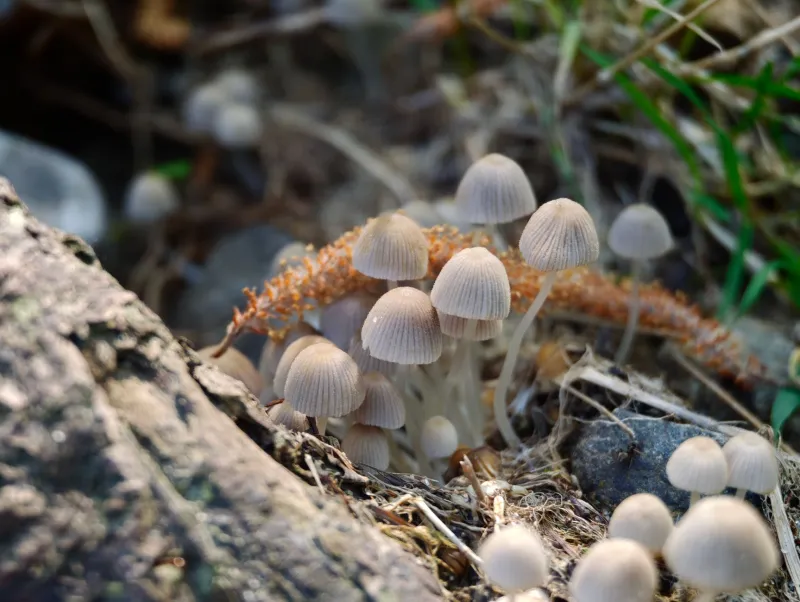
Ask most Americans what makes a forest healthy, and they will point upward—to the canopy, the wildlife, the streams threading through the understory. Rarely does anyone look down. Yet the most consequential ecological processes sustaining those forests, prairies, and wetlands are unfolding in the top few inches of soil, carried out by organisms so small that a single teaspoon of healthy forest earth may contain more microbial species than there are plants in all of North America.
Soil microbiology has long occupied a peripheral corner of ecological science, constrained by the difficulty of studying organisms that resist laboratory cultivation and defy easy classification. That constraint is dissolving rapidly. The emergence of high-throughput DNA sequencing, metagenomics, and advanced stable isotope tracing has given researchers an unprecedented window into microbial community structure and function—and what they are finding is both astonishing and deeply alarming.
A Civilization Below the Surface
The soil microbiome is not a uniform biological layer. It is a stratified, spatially heterogeneous network of bacteria, archaea, fungi, protists, and viruses, each occupying distinct ecological niches and performing specialized biochemical functions. Nitrogen-fixing bacteria transform atmospheric nitrogen into forms that plants can absorb. Mycorrhizal fungi extend plant root systems by orders of magnitude, ferrying phosphorus and water in exchange for photosynthate carbon. Decomposer communities break down organic matter at rates that determine how quickly nutrients re-enter circulation—and how much carbon is stabilized in the soil rather than released into the atmosphere.
Recent research from institutions including the Department of Energy's Joint Genome Institute and the USDA's Agricultural Research Service has begun mapping the sheer functional breadth of these communities. A 2022 study published in Nature Microbiology identified tens of thousands of previously undescribed microbial lineages in North American soils alone, many of which appear to play roles in suppressing plant pathogens, moderating soil pH, and regulating the pace of carbon mineralization. The implication is clear: we have been managing land on the basis of a radically incomplete biological inventory.
The Carbon Connection
Few dimensions of soil microbiology carry more urgency than the relationship between microbial communities and carbon sequestration. Soils represent the largest terrestrial carbon reservoir on Earth, storing roughly twice as much carbon as the atmosphere and all living vegetation combined. The stability of that reservoir is not a passive geological fact—it is an active biological outcome, negotiated continuously by microbial metabolic processes.
Microbial necromass, the residue of dead microbial cells, now appears to be one of the most significant contributors to stable soil organic carbon. Research led by scientists at the University of California and collaborating institutions has demonstrated that fungal and bacterial cell wall compounds, particularly chitin and peptidoglycan, are incorporated into organo-mineral complexes that resist decomposition for centuries. The implication for climate policy is substantial: land management strategies that deplete microbial biomass do not merely reduce soil fertility—they actively destabilize carbon stores that took generations to accumulate.
Conversely, management approaches that sustain microbial diversity appear to enhance the efficiency of carbon stabilization. Long-term ecological research at sites including the Konza Prairie Biological Station in Kansas and the Hubbard Brook Experimental Forest in New Hampshire has shown that soils under native plant communities harbor significantly greater functional diversity than those under disturbed or simplified vegetation regimes, with measurable consequences for carbon retention.
Industrial Pressure and Microbial Collapse
The threats to soil microbial communities across American landscapes are neither subtle nor speculative. Conventional tillage physically disrupts the hyphal networks that mycorrhizal fungi require to function, fragmenting connections that may have taken decades to establish. Synthetic nitrogen fertilizers, applied at scale across the agricultural Midwest, alter soil chemistry in ways that consistently favor fast-growing bacterial generalists over the specialized communities associated with nutrient cycling efficiency and plant resilience. Broad-spectrum fungicides, widely used in both agricultural and urban forestry contexts, suppress fungal diversity with consequences that cascade through the entire soil food web.
Forest management practices present their own suite of concerns. Whole-tree harvesting, which removes not just timber but branches, bark, and fine roots, strips away the organic material inputs that sustain decomposer communities. Compaction from heavy machinery reduces soil porosity and oxygen availability, creating conditions hostile to aerobic microbial metabolism. Post-harvest site preparation techniques that involve burning or chemical treatment of slash further simplify the microbial landscape at precisely the moment when a recovering forest most depends on below-ground biological support.
The consequences manifest above ground in ways that land managers observe but often misattribute. Reduced seedling establishment rates, increased vulnerability to drought stress, and elevated susceptibility to fungal pathogens have all been linked in recent research to degraded soil microbial communities. A 2021 study in Soil Biology and Biochemistry examining reforestation outcomes across the Pacific Northwest found that seedling survival was significantly predicted by the functional diversity of the microbial community at planting sites—more so than by precipitation, soil texture, or seed source.
Restoration Pathways: What the Science Supports
The restoration ecology literature has begun to document promising, evidence-based strategies for rebuilding degraded soil microbiomes. Inoculation with native mycorrhizal consortia at reforestation sites has shown measurable benefits in multiple controlled trials, though researchers caution that inoculant quality and site matching are critical variables. The introduction of diverse organic matter inputs—including biochar, compost derived from site-native materials, and woody debris retention—consistently supports microbial community recovery in both agricultural and forest contexts.
Perhaps the most compelling evidence comes from research on the role of plant community diversity in driving soil microbial diversity. Studies across tallgrass prairie restoration sites in Illinois and Iowa have demonstrated that increasing the number of native plant species in restored plots produces rapid and measurable increases in microbial functional richness, reinforcing the case for diverse, native-species-centered restoration approaches over simplified monoculture plantings.
Cover cropping in agricultural systems has emerged as a particularly well-documented intervention. Multi-species cover crop mixes, which introduce a variety of root architectures and exudate chemistries into the soil, have been shown in USDA-funded trials to increase bacterial and fungal diversity within two to three growing seasons, with downstream benefits for nitrogen use efficiency and crop resilience.
A Policy Framework Still Waiting to Catch Up
Despite the mounting evidence, soil microbial health remains conspicuously absent from most federal land management frameworks. The USDA's Forest Service and Bureau of Land Management both maintain soil quality standards, but these standards are largely physical and chemical in nature—measuring compaction, erosion, and nutrient levels while ignoring biological function entirely. The 2023 update to the Forest Service's National Forest Management Act planning regulations represented a missed opportunity to integrate microbial health metrics into landscape assessments.
Several advocacy coalitions, including soil science professional societies and a growing number of conservation organizations, have called for the development of biologically inclusive soil health indicators as a condition of federal land management certification and subsidy programs. The scientific infrastructure to support such a shift is increasingly available—standardized metagenomic assessment protocols have been piloted successfully in USDA research contexts and could be scaled with appropriate investment.
What is lacking is not scientific capacity but political will. The soil beneath America's forests and grasslands is not an inert substrate. It is a living system of extraordinary complexity, one that performs ecological services no engineered alternative can replicate. Treating it as such—in law, in regulation, and in the design of restoration investments—is not merely an ecological imperative. It is a prerequisite for any credible claim to science-driven land stewardship.