Reconsidering the Reviled: What Termite Science Tells Us About Soil Health, Carbon Cycling, and the Limits of Pest Policy
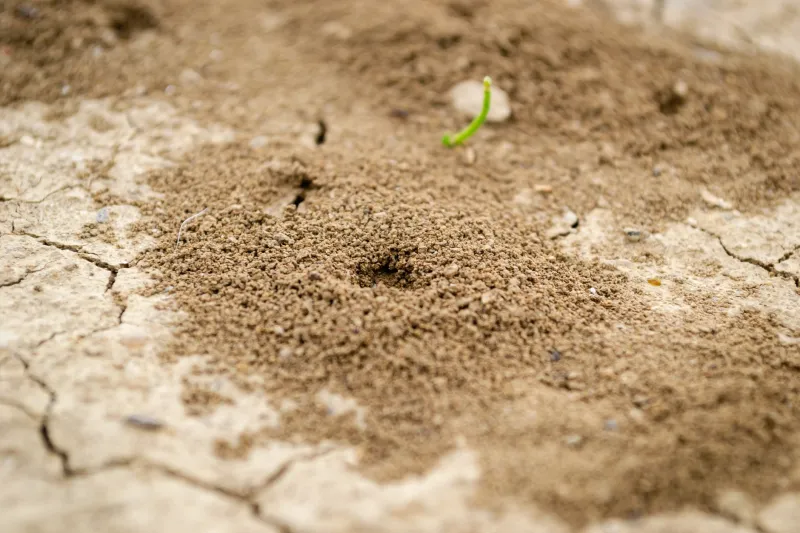
Termites occupy a singular position in the American cultural imagination—synonymous with destruction, liability, and unwanted expense. Pest control companies collectively generate billions of dollars annually from their suppression, and the word itself functions almost as shorthand for ecological threat. Yet a growing body of ecological research is dismantling that narrow characterization, revealing native termite species as sophisticated engineers of soil structure, nutrient flow, and carbon dynamics across southern forests, arid grasslands, and subtropical savannas. The policy implications are significant and largely unaddressed.
A Taxonomy of Misunderstanding
The United States hosts roughly 50 native termite species, distributed across dramatically different ecological zones—from the longleaf pine understories of the Gulf Coastal Plain to the desert grasslands of the Chihuahuan Basin and the humid subtropical woodlands of Florida. These species are taxonomically and functionally distinct from the invasive Formosan subterranean termite (Coptotermes formosanus), which arrived via post-World War II shipping traffic and has since established damaging populations across the Gulf South.
This distinction matters enormously, both scientifically and practically. When pest management policy treats all termite activity as equivalent—as it routinely does—it conflates an ecological service provider with an invasive disruptor. The result is indiscriminate suppression that degrades soil function while doing little to address the structural damage caused by non-native species.
Ecologists have long recognized termites as keystone detritivores in tropical systems, where their mound-building and tunneling activity shapes landscape-scale hydrology and nutrient availability. What is now becoming clearer is that analogous processes operate, at meaningful scales, within North American ecosystems as well.
Engineering the Soil From Below
The primary ecological contribution of subterranean termite species lies in their physical restructuring of soil architecture. As colonies excavate galleries and construct foraging tunnels, they dramatically increase macroporosity—the network of larger pore spaces through which water and air move. Research conducted in longleaf pine restoration sites across Alabama and Georgia has documented measurable increases in infiltration rates in areas with active native termite colonies compared to chemically treated adjacent plots.
This matters for several reasons. Compacted soils shed rainfall rather than absorbing it, accelerating runoff, erosion, and downstream nutrient loss. In the context of increasingly variable precipitation patterns across the American South and Southwest, the infiltration-enhancing function of termite activity represents a form of natural hydrological regulation that is difficult and expensive to replicate through mechanical intervention.
Beyond water movement, termite galleries redistribute organic material through the soil profile in ways that influence microbial community structure. Termites transport fungal spores, bacterial communities, and partially decomposed plant matter as they forage, effectively inoculating deeper soil horizons with organisms that would otherwise remain concentrated at the surface. This vertical redistribution accelerates decomposition kinetics and supports the kind of microbial diversity that underpins long-term soil fertility.
Carbon Cycling at the Colony Scale
Perhaps the most consequential—and most contested—dimension of termite ecology involves their relationship to carbon dynamics. Termites are, at the biochemical level, decomposers: they break down lignocellulosic material that most other organisms cannot process, releasing carbon dioxide and methane as metabolic byproducts. This has led some researchers to frame termites as net carbon emitters, a characterization that has occasionally surfaced in policy discussions around natural carbon accounting.
The reality is considerably more nuanced. While termite colonies do produce greenhouse gases during digestion, the full carbon accounting must also incorporate what termites contribute to soil organic carbon formation. When termites incorporate partially decomposed organic matter into their mound structures—which are chemically distinct from surrounding soil, enriched in clay minerals and microbial biomass—they create microenvironments where carbon stabilization occurs at elevated rates. Studies examining termite mound soils in southeastern US grasslands have found organic carbon concentrations substantially higher than in adjacent undisturbed soils.
Furthermore, the decomposition that termites accelerate is not simply carbon loss. It is also the mechanism through which nutrients locked in woody debris become available to living plants—a transfer that supports above-ground biomass accumulation and, in turn, long-term carbon sequestration through forest growth. Suppressing this decomposition cycle through broad-spectrum termiticide application does not preserve carbon; it interrupts the biological machinery through which ecosystems process and redistribute it.
The Policy Gap
Federal and state pest management frameworks in the United States were not designed with ecological nuance in mind. The Environmental Protection Agency's registration of termiticides under the Federal Insecticide, Fungicide, and Rodenticide Act focuses on efficacy and human safety, not on distinguishing between the ecological roles of target species. State-level structural pest control regulations similarly prioritize property protection, with no provisions for assessing or mitigating impacts on native termite populations.
This regulatory architecture made a certain kind of sense when termites were understood exclusively as structural pests. It makes considerably less sense now, when the ecological literature is documenting their contributions to the soil systems that underpin forest productivity, carbon storage, and watershed function—all outcomes that federal land management agencies are actively trying to promote.
The disconnect is particularly acute in the context of federal restoration initiatives. Programs administered through the USDA Forest Service and the Natural Resources Conservation Service increasingly prioritize soil health as a measurable restoration outcome. Yet those same agencies operate within a broader regulatory environment that permits—and in some contexts subsidizes—pest control practices that degrade the very soil processes restoration programs are trying to rebuild.
Toward a More Sophisticated Management Framework
What would a scientifically grounded approach to termite management look like in practice? Researchers and restoration ecologists working in this space have proposed several principles worth serious policy consideration.
First, pest management regulations should formally distinguish between native and invasive termite species, directing suppression efforts toward the latter while establishing protections—or at minimum, non-interference guidelines—for the former. This parallels the framework already applied to other taxonomic groups, including plants and fish, where nativity is a primary criterion for management classification.
Second, federal carbon accounting methodologies—particularly those informing voluntary carbon markets and federally recognized offset protocols—should incorporate termite-mediated soil carbon contributions into their modeling frameworks. Current protocols tend to treat soil carbon as a passive reservoir rather than as the product of active biological processes, an omission that distorts the true value of intact native invertebrate communities.
Third, land managers working in restoration contexts, particularly in longleaf pine systems, southeastern grasslands, and arid southwestern woodlands, should have access to guidance on assessing native termite activity as an indicator of soil biological function—much as mycorrhizal colonization rates and earthworm density are increasingly used as proxies for soil health in agricultural contexts.
The Larger Lesson
The termite case is, in important respects, a microcosm of a broader challenge confronting American environmental science and policy: the difficulty of translating ecological complexity into regulatory frameworks built around simplified categories. Pest. Benefit. Emitter. Sequesterer. These binaries are administratively convenient, but they consistently fail to capture the functional reality of organisms embedded in intricate ecological webs.
Native termites are not universally beneficial, and the structural damage caused by invasive species is real and economically significant. But neither are they the undifferentiated ecological menace that pest control marketing and outdated regulatory frameworks imply. The science now available to us demands a more calibrated response—one that protects property from genuinely destructive species while preserving the subterranean biological infrastructure that American ecosystems depend upon.
Getting that balance right will require sustained investment in ecological research, regulatory modernization, and the kind of interdisciplinary collaboration between entomologists, soil scientists, and forest policy specialists that remains too rare. The soil beneath America's forests and grasslands is more alive, and more consequential, than most policy frameworks currently acknowledge. Termites are part of that life—and it is past time to govern accordingly.