Wetland Engineers Without Blueprints: The Quiet Hydrological Work of Amphibians and the Crisis Unfolding Beneath Our Feet
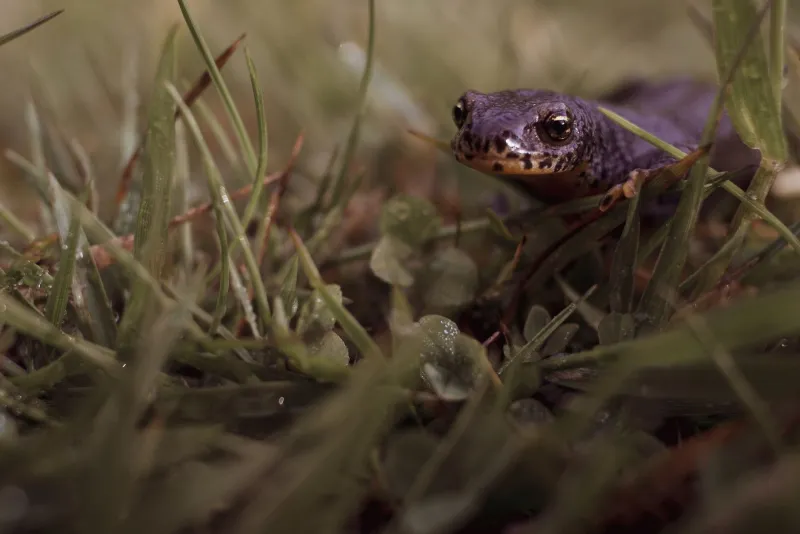
When ecologists speak of ecosystem engineers, the conversation gravitates toward the charismatic and the conspicuous—beavers felling trees, elephants reshaping savannas, wolves reorganizing the behavior of entire ungulate herds. Rarely does it linger on the spotted salamander navigating a vernal pool in March, or the chorus frog calling from a flooded Carolina bay. Yet the science is increasingly unambiguous: amphibians are among the most consequential shapers of wetland function in North America, and their accelerating disappearance is quietly dismantling hydrological infrastructure that took geological time to construct.
The Engineering No One Mapped
The mechanisms by which amphibians modify their environments are numerous and, until recently, poorly understood. Research conducted over the past two decades has documented that burrowing species—particularly mole salamanders of the genus Ambystoma and several toad families—dramatically alter soil porosity and water infiltration rates. A single population of spotted salamanders migrating annually through a northeastern forest can collectively move thousands of kilograms of organic material and create burrow networks that function as preferential flow pathways during heavy rainfall events. These pathways are not incidental; they regulate the rate at which precipitation enters the water table, effectively buffering downstream flood pulses.
Frog and toad tadpoles contribute a separate but equally significant function. Dense tadpole aggregations in shallow wetlands actively disturb sediment, suspending organic particles that would otherwise compact into anaerobic layers. This bioturbation accelerates decomposition, cycles nutrients back into the water column, and prevents the kind of sediment stratification that reduces wetland productivity. Studies from the Great Plains and the Southeast have shown that wetlands with intact amphibian communities maintain measurably higher rates of nitrogen cycling than those from which amphibians have been removed or have declined substantially.
Perhaps most underappreciated is the role amphibians play as biological pumps in the carbon economy of wetland soils. By consuming algae, detritus, and invertebrates, then excreting nutrient-rich waste in concentrated areas, they redistribute energy across wetland gradients in ways that support plant community diversity and peat formation. When those populations disappear, that redistribution stops.
A Collapse Measured in Numbers
The scale of amphibian decline in the United States is difficult to overstate. The U.S. Geological Survey's Amphibian Research and Monitoring Initiative has documented population declines across every major region of the country, with an average annual rate of loss estimated at nearly 3.7 percent. For some species—the boreal toad in the Rocky Mountain West, the dusky gopher frog in the Gulf Coast longleaf system, the hellbender salamander across Appalachian river networks—the trajectory approaches functional extinction within accessible conservation timescales.
The drivers of this collapse are well established and mutually reinforcing. Wetland drainage for agriculture and development has eliminated more than half of America's pre-settlement wetland extent. Agricultural runoff introduces atrazine, nitrates, and endocrine-disrupting compounds at concentrations that impair amphibian reproduction and immune function even when they fall below regulatory thresholds established for human health. Chytridiomycosis—the fungal disease caused by Batrachochytrium dendrobatidis—has swept through populations with devastating efficiency, particularly in the West and Southeast. Climate-driven shifts in precipitation timing are decoupling the seasonal cues that trigger breeding migrations, misaligning amphibian life cycles with the ephemeral water conditions their larvae require.
What the Wetlands Reveal
The hydrological consequences of these losses are beginning to emerge in the scientific literature, though they have not yet entered mainstream water management discourse. Research published in Wetlands and Freshwater Biology over the past decade has documented increased sediment compaction, reduced infiltration capacity, and altered nutrient export in wetland systems experiencing severe amphibian decline. Vernal pools in New England that have lost their Ambystoma populations show measurably different soil moisture profiles compared to pools with intact communities. Prairie potholes in the Dakotas—already under extraordinary agricultural pressure—are losing the bioturbation services that historically maintained their open-water characteristics.
For communities dependent on healthy watersheds for flood attenuation and groundwater recharge, these are not abstract ecological concerns. The same wetland complexes that once absorbed storm surges across the Gulf Coast, the Mississippi floodplain, and the Atlantic Coastal Plain were maintained in part by the biological activity of species whose names most water managers cannot identify.
Policy Gaps That Cost Ecosystems
Federal and state water policy in the United States has never formally recognized amphibians as hydrological infrastructure. The Clean Water Act protects wetland extent—imperfectly, and subject to ongoing legal erosion following recent Supreme Court decisions—but says nothing about the biological communities that determine wetland function. A wetland drained of its amphibians and replenished with water is not the same system. It is an approximation that performs fewer services with less resilience.
The Endangered Species Act provides a legal hook for individual species protection, but its species-by-species architecture struggles to address the community-level dynamics that make amphibians ecologically significant. Protecting the dusky gopher frog while the longleaf pine ecosystem it inhabits continues to degrade is a conservation gesture, not a conservation strategy.
What is needed is a framework that treats amphibian community integrity as a measurable indicator of wetland function—analogous to the way dissolved oxygen levels or macroinvertebrate indices are used to assess water quality. Several states have experimented with biotic integrity indices that incorporate amphibian metrics, but these tools remain peripheral to regulatory decision-making.
Restoration as Rehydration
The encouraging dimension of this science is that amphibians respond to habitat restoration with notable speed when the conditions are right. Projects in the Midwest, the Southeast, and the Pacific Northwest have demonstrated that wetland restoration—particularly the reestablishment of hydroperiod variability and the removal of invasive fish that prey on larvae—can support amphibian recolonization within a few breeding seasons. As populations recover, the engineering functions they provide begin to reassert themselves: infiltration rates improve, sediment dynamics shift, nutrient cycling accelerates.
This responsiveness makes amphibians unusually valuable as both indicators of ecosystem health and as agents of ecosystem recovery. Investing in their populations is not merely a biodiversity objective—it is a water infrastructure investment with measurable returns in flood resilience, groundwater recharge, and wetland carbon storage.
The science has long been available. What remains missing is the policy imagination to treat these small, cold-blooded animals as the essential water managers they have always been.