Too Much of a Good Thing: The Ecological Reckoning of America's Deer Boom
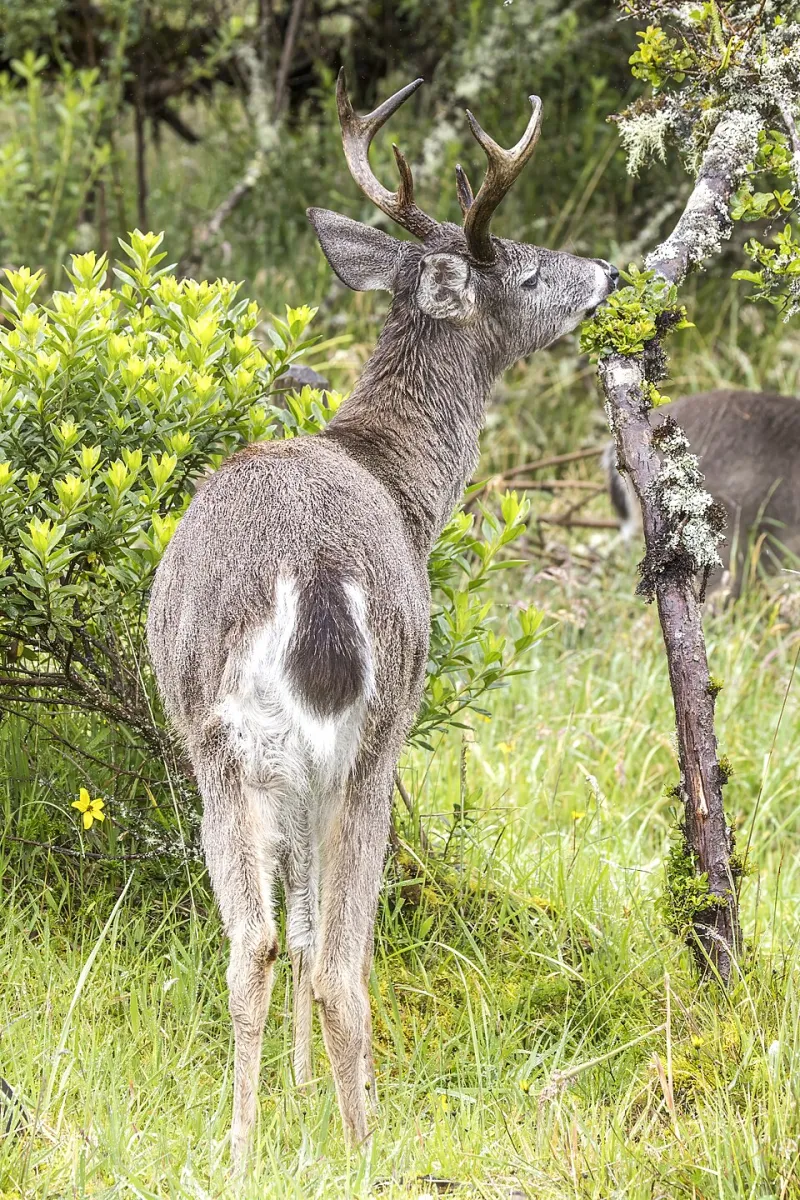
Photo: Charles J. Sharp, CC BY-SA 4.0, via Wikimedia Commons
The white-tailed deer is one of America’s great conservation success stories. A century ago, unregulated hunting and habitat loss had pushed deer to scarcity in many regions. Today, suburban yards, agricultural edges, and reduced predator populations support densities that would have astonished earlier generations. But the recovery has overshot in many places, and the ecological bill is coming due.
A Century of Recovery, a Decade of Consequence
Deer are native, and their presence is not inherently a problem. The issue is abundance. In forests from Pennsylvania to Wisconsin to the Piedmont, high deer densities have simplified understories, suppressed tree regeneration, and favored browse-tolerant or invasive plants. The result is a forest that can look green from the road but is ecologically threadbare beneath the canopy. Historical baselines matter here: today’s densities are often far above those that shaped the forests we inherited.
The Understory as a Casualty
Forest ecologists often read deer pressure in what is missing: oak seedlings, native shrubs, spring wildflowers, and the complex structure that songbirds need. Browsing can prevent a cohort of trees from reaching the midstory. Over time, that changes forest composition and reduces resilience to drought, insects, and climate change. In some areas, deer act as a barrier to restoration itself, eating planted seedlings before they can establish.
Songbirds, Ticks, and Carbon
The consequences ripple outward. Many songbirds depend on understory insects and cover; simplified forests support fewer of both. Deer also interact with tick-borne disease cycles, though the ecology is complex and not reducible to a single cause. And because deer browsing can slow tree growth and alter species composition, it may affect carbon storage—an emerging area of research that deserves more attention.
Why Management Stalls
Deer management is contentious because deer are simultaneously wildlife, food, property, and symbol. Hunters value abundance; homeowners value visibility; animal welfare advocates question lethal control; public agencies face pressure from all sides. In suburbs, firearms restrictions and safety concerns complicate hunting. On public lands, predator populations are often too low to exert meaningful top-down control. The result is a patchwork of approaches that rarely matches the scale of the problem.
Experiments in Coexistence
Communities are testing new models. Controlled hunts in parks and preserves can reduce local densities. Professional sharpshooting is used where hunting is unsafe. Fencing and deer exclosures can protect high-value restoration sites, though they are expensive and can hinder wildlife movement. Predator reintroduction—such as wolves in some western landscapes—can affect deer behavior and density, but it is not a universal solution and remains socially fraught. The most promising approaches combine several tools with clear monitoring and public engagement.
The Cost of Inaction
Doing nothing is not neutral. It is a decision to let browsing pressure continue shaping forests for decades. Scientists increasingly argue for adaptive management: set measurable ecological goals, monitor understory recovery, and adjust deer numbers accordingly. That means moving beyond the false choice between loving deer and protecting forests. Americans can have deer and diverse forests, but not everywhere at the densities now common. In 2026, the question is whether management will catch up with the science.