The Uncounted Grid: Why Forest Roads Are Watershed Infrastructure, Not Just Access
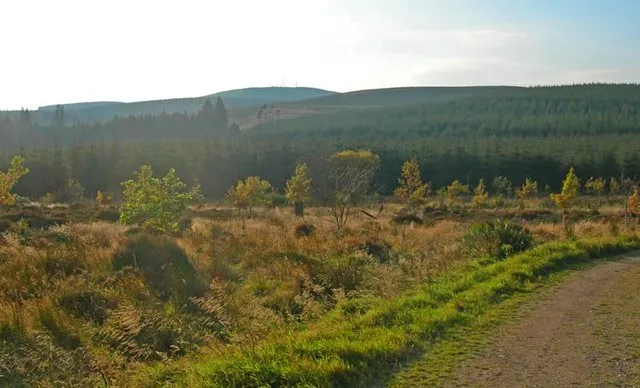
Photo: C Michael Hogan, CC BY-SA 2.0, via Wikimedia Commons
Forest roads are usually discussed as access: a way to reach a trailhead, a timber sale, a fire line, or a remote campsite. That framing is incomplete. Roads are also ecological infrastructure. They intercept water, concentrate runoff, deliver sediment to streams, fragment habitat, alter forest carbon dynamics, and create maintenance obligations that can outlast the forests they were built to serve. In the United States, the scale of this network is enormous and the accounting is uneven. That combination makes forest roads one of the quietest blind spots in watershed science and policy.
A Network Larger Than the Interstate System
The U.S. Forest Service manages roughly 370,000 miles of roads—several times the length of the interstate highway system. Add state forests, tribal lands, private industrial timberlands, and county and local roads, and the national forest road network becomes a mosaic of jurisdictions with inconsistent inventories and maintenance standards. Some roads are paved and engineered for heavy use. Many are unpaved, seasonal, legacy routes that were never designed for current runoff or storm intensity.
The first problem is simply knowing what exists. Road inventories are often incomplete, outdated, or inconsistent across ownerships. A watershed manager may have precise data for one national forest and almost none for adjacent private parcels. That data gap makes cumulative effects difficult to assess and prioritization difficult to defend.
Sediment: The Quiet Export
Unpaved forest roads are among the most efficient sediment delivery systems in many forested watersheds. Ditch lines, cutslopes, culverts, and stream crossings concentrate water and route fine sediment into channels. The ecological consequences are well documented: reduced spawning habitat, altered macroinvertebrate communities, and increased turbidity during storms. Sediment is not a dramatic pollutant. It does not glow or smell. It accumulates quietly, which may be one reason road-related sedimentation has never commanded the policy attention that point-source pollution has.
Stream crossings deserve particular scrutiny. A poorly sized culvert can become a barrier to fish passage at low flow and a debris trap at high flow. A crossing that fails during a storm can dump a road prism into a stream channel. Climate change is raising the stakes, because culverts designed for historical rainfall may be undersized for current and future storms.
Crossings, Fragmentation, and Wildlife
Roads also fragment habitat. They create edges, alter microclimate, generate noise and light, and increase mortality for wildlife. Some species avoid road corridors altogether; others are attracted to them for travel, forage, or scavenging. The result is a landscape divided into patches of varying quality, with consequences for gene flow, predator-prey dynamics, and population persistence.
These effects are not limited to large mammals. Roads can facilitate the spread of invasive plants and pathogens, alter amphibian movement, and change stream connectivity at culverts. The ecological footprint of a road is wider than its gravel surface. It includes the drainage network, the cleared right-of-way, the associated traffic, and the maintenance regime.
The Carbon Ledger of Access
Forest roads also affect carbon. Construction and maintenance disturb soil, remove vegetation, and create edge conditions that can alter growth and decomposition. Road networks can increase forest fragmentation, which in turn affects carbon storage and biodiversity. These effects are rarely included in forest carbon accounting, which tends to focus on stand-level biomass and harvest cycles rather than the infrastructure that makes harvest possible.
That omission matters for policy. If carbon markets and forest plans reward sequestration without accounting for road-associated emissions and edge effects, they may overstate the climate benefits of certain management pathways. A more complete ledger would include road construction, maintenance, decommissioning, and the long-term ecological costs of fragmentation.
The Maintenance Backlog as Ecological Debt
The U.S. Forest Service and other landowners carry a substantial deferred maintenance backlog for roads. When maintenance is deferred, the ecological consequences are not deferred. Culverts clog, ditches fail, erosion increases, and storm damage compounds. In some watersheds, the cheapest option is decommissioning: removing culverts, recontouring slopes, and restoring drainage patterns. But decommissioning requires funding, planning, and public acceptance. It also competes with the political appeal of new access.
This is ecological debt. The road was built with an implicit promise of maintenance, and when that promise is broken, streams and wildlife absorb the cost. A 2026 policy agenda should treat road maintenance and decommissioning as watershed restoration, not as housekeeping.
Why the Blind Spot Persists
Forest roads are difficult to govern because they cross so many boundaries. They are infrastructure, transportation, forestry, fish habitat, and water-quality issues at once. No single agency owns the whole picture. Inventories are fragmented, budgets are siloed, and monitoring is often project-specific rather than network-wide.
There is also a cultural reason. Roads are seen as neutral access. That assumption hides the fact that a road is a long-term ecological intervention. Once built, it changes hydrology, habitat, and disturbance regimes. Calling that infrastructure does not mean opposing access. It means accounting for the consequences of access.
A 2026 Research and Policy Agenda
Better road science is possible. LiDAR, remote sensing, and field-based inventories can improve mapping of road networks and stream crossings. Hydrologic models can identify priority segments for decommissioning or upgraded drainage. Long-term monitoring can track sediment loads, fish passage, and wildlife movement before and after road treatments. Tribal co-management and local knowledge can fill gaps that agency databases miss.
Policy should follow. Federal and state programs need consistent road inventories, dedicated decommissioning funds, climate-ready culvert standards, and a requirement that road effects be included in watershed and carbon accounting. Forest plans should treat road networks as ecological infrastructure with measurable performance objectives, not as background scenery.
The unaccounted grid is not invisible because it is small. It is invisible because our institutions have not chosen to see it. In 2026, with climate stress mounting and restoration dollars scarce, that choice is becoming harder to defend. Forest roads are watershed infrastructure. The sooner policy says so, the sooner research can help make them part of the solution rather than the quiet source of the problem.